Quick answer
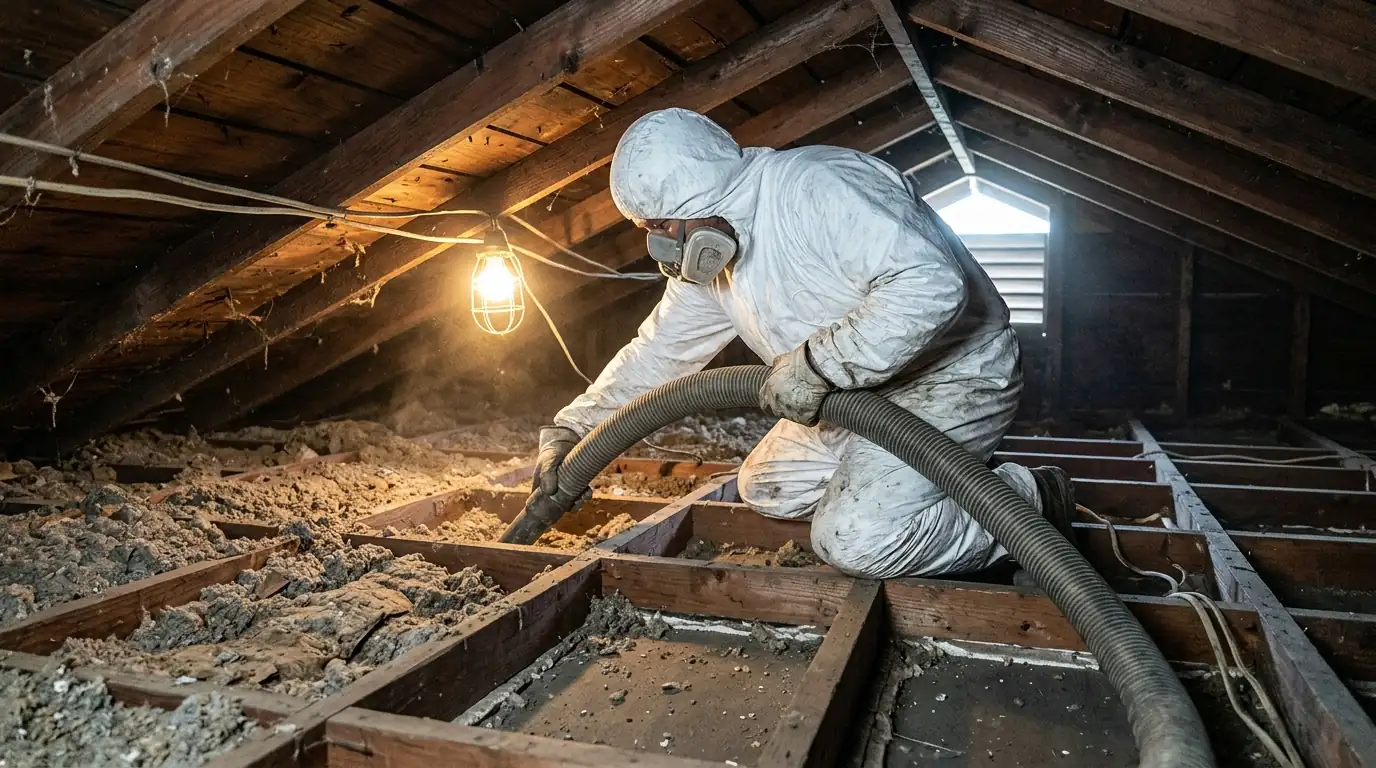
Attic cleanup and insulation replacement means removing contaminated insulation, droppings and nests with a high-powered vacuum, sanitizing the exposed framing and drywall backing, then blowing in fresh insulation to the right depth. We do it after the animals are trapped out and the entries are sealed, so the new insulation stays clean. In most Long Beach homes the work takes one to three days depending on attic size and how far the contamination spread.
Roof rats are the reason for most of the attic cleanups we do in Long Beach. They climb palms, ivy-covered fences and backyard citrus, cross onto the roof and slip in through a roof return or a torn gable vent. Over a few months a small group of rats packs the insulation with runways, latrine spots and shredded nest material. Insulation that has been tunneled and soaked loses much of its value, and the smell travels down through ceiling light fixtures and attic hatches into the rooms below.
Pigeons create a different version of the same problem. On homes and small apartment buildings with open gable vents or broken eave blocks, they nest just inside the opening and leave thick layers of droppings and feathers on the insulation. In both cases, cleaning a few visible spots is rarely enough. The usual answer is to remove the soiled insulation in the affected bays, or the whole attic when contamination is widespread, treat the surfaces underneath and start over with new material.
Partial cleanup or full insulation replacement
Not every attic needs to be stripped. When a short rat problem was caught early and the activity stayed in one or two corners, we remove the insulation in those bays, sanitize the wood underneath, and patch in new material to match the surrounding depth. That keeps cost down and still removes the odor source.
Full replacement makes sense when runways crisscross the whole attic, when latrine areas sit over several rooms, or when the existing insulation was thin and old anyway. In many 1920s and 1950s Long Beach homes the attic holds a mix of original rock wool, a later layer of batts and some blown material from a past retrofit, all of it compressed and dusty. Trying to clean around that mix rarely works well. Starting fresh gives you a known depth, clean framing and an attic that is easy to inspect in the future, since new droppings show up clearly on a clean, level surface.
One caution applies to older homes. Loose, pebble-like gray or gold insulation may be vermiculite, and some vermiculite contains asbestos. If we see it, we stop and recommend testing before any removal.
Signs your attic needs a cleanup, not just more traps
Lingering ammonia or musty odor
A sharp urine smell near the attic hatch, closets or ceiling fixtures that stays after trapping ends usually means soaked insulation is still in place.
Runways and tunnels in insulation
Flattened paths along the top plates and trenches dug through blown insulation show where rats traveled for weeks or months.
Droppings in clusters or layers
Scattered pellets are expected after any rodent activity, but piles in corners, on ducts or along the eaves point to long-term latrine areas.
Nests of shredded material
Balls of shredded insulation, paper, duct wrap and leaves tucked near the eaves or against the chimney chase mean animals lived there, not just passed through.
Thin or compressed insulation
Blown insulation that now sits only a few inches deep, or batts pushed aside, leaves rooms below hotter in late summer and cooler on winter nights.
Pigeon droppings near gable vents
Crusted white droppings, feathers and twig nests just inside a vent opening need careful removal before anyone spends time working in the attic.
How we clean an attic and replace the insulation
Confirm the animals are out
Cleanup starts only after trapping shows no fresh captures or droppings and the entry points are sealed. Putting new insulation into an attic that rats can still reach wastes the work.
Inspect and map contamination
We walk the attic on the joists, photograph latrine areas, nests, chewed wiring and damaged ductwork, and decide whether partial or full removal makes sense.
Protect the living space
The hatch area and the path through the house are covered, and the removal hose runs through the hatch or a gable vent so debris never crosses your rooms.
Remove insulation and debris
Our crew dampens droppings first, then pulls insulation, nests and droppings out with a high-powered insulation vacuum into large sealed bags. Hand work clears corners and eaves the hose cannot reach.
Sanitize and deodorize
Exposed joists, top plates and drywall backing are sprayed with a disinfectant and an enzyme product made for urine odor, then allowed to dry before anything new goes in.
Repair and seal what we find
Chewed duct wrap, crushed ducts and damaged wiring are noted for repair, and any remaining small gaps in the attic are closed with metal mesh or flashing.
Blow in new insulation
Fresh blown insulation is installed evenly across the attic floor to the planned depth, with baffles at the eaves so soffit and rafter vents keep moving air.
What attic cleanup and insulation typically cost in Long Beach
Price follows attic size, how much insulation is soiled and how hard the attic is to work in. A single-story bungalow with a roomy attic is very different from a low-pitch ranch where the crew crawls on their knees the whole time, or a duplex with two separate attic spaces.
| Typical job | Typical range |
|---|---|
| Spot cleanup of latrine areas | $385 to $1,240 per visitRemoving droppings and soiled insulation in a few bays, then sanitizing those areas. |
| Full insulation removal | $1,385 to $3,940Vacuum removal, bagging and haul-away of all insulation and debris in a typical attic. |
| Sanitizing and deodorizing | $285 to $685 per visitDisinfectant and enzyme treatment of framing and drywall backing after removal. |
| New blown insulation | $1,465 to $3,780Blown fiberglass or cellulose across a typical attic floor, with eave baffles. |
What moves the price
- Attic floor area, which in Long Beach bungalows and ranch homes usually runs about 800 to 1,600 square feet
- Roof pitch and headroom, since low attics slow every step
- Whether contamination is limited to a few bays or spread across the whole attic
- Depth and type of existing insulation, including old loose vermiculite that needs testing first
- Ductwork, recessed lights and wiring that the crew must work around
- Exclusion or repair work still needed before new insulation goes in
These are typical ranges, not a quote, and the price for your attic is set after we inspect it. Compare more jobs in the treatment price guide.
Working safely around droppings and pigeon waste
Rodent droppings and urine can carry bacteria and viruses, and dried pigeon droppings can harbor fungal spores. The risk comes mostly from breathing dust stirred up during cleanup, which is why sweeping or using a household vacuum is the wrong approach. We dampen droppings and nests with a disinfectant before disturbing them, wear respirators, disposable coveralls and gloves, and keep the work under the negative pull of the removal vacuum so dust goes into the bags instead of the air.
If you go into the attic yourself before we arrive, keep the trip short, avoid stirring up dust and do not try to clean the droppings by hand. Anyone with asthma or a weakened immune system should stay out of the attic entirely until cleanup is done.
- Dampen droppings before touching them, never sweep dry
- Use a respirator and gloves, not a paper dust mask
- Bag and seal debris at the point of removal
- Keep the attic hatch closed while work is underway
Why the cleanup has to come after exclusion
The order matters. Trapping removes the animals that are inside now. Exclusion closes the roof returns, vents and gaps that let them in. Cleanup and new insulation come last. If insulation is replaced first, the next rat that finds an open roof return lands on clean, fluffy material that makes an ideal nest, and the money is lost within a season.
Clean insulation also helps future monitoring. Once the attic floor is level and clean, a single dropping or new runway is easy to spot during a quick look through the hatch. We often leave a couple of monitoring stations in the attic after the job so any new activity shows up early. Keeping palm fronds, ivy and tree limbs trimmed back from the roof edge, ideally several feet, removes the bridges roof rats use and keeps the sealed roofline from being tested every night.
Long Beach attics where roof rats settle in
Roof rats thrive in older Long Beach neighborhoods with mature trees and dense landscaping. In California Heights, Bixby Knolls and Los Cerritos, tall palms, avocado and citrus trees and ivy on back fences give rats a direct route to the roof. The Craftsman bungalows in Belmont Heights and Rose Park often have low attics with open rafter tails and gable vents that have been painted over and torn for decades, while the Spanish homes in Bluff Park and Cal Heights have clay tile eaves that leave open channels into the attic unless they are closed with bird stop.
The 1950s ranch homes of Los Altos, the Plaza and El Dorado Park Estates usually have shallow, wide attics with blown insulation and ductwork running through them, which makes runways and latrine areas easy to spread across the whole space. Pigeons are more common on downtown and Alamitos Beach apartment buildings, where broken vent covers face the street. Late summer heat makes attic odor worse, and many owners call us in August or September when the smell finally reaches the bedrooms.
Getting the house ready for an attic cleanup
- Clear a path from the front door or garage to the attic hatch
- Move items stored directly under the hatch or in closets below it
- Keep pets in a closed room or outdoors while the crew works
- Let us know about any attic fans, solar wiring or recent roof work
- Leave driveway space for the removal vacuum and bagged debris
- Note any rooms with odor so we check the ceiling above them
Where we do attic cleanup & insulation replacement
- Downtown Long Beach 90802
- North Long Beach 90805
- Belmont Shore 90803
- Bixby Knolls 90807
- California Heights 90807
- Los Altos 90815
- Naples 90803
- Rose Park 90804
- Wrigley 90806
- Signal Hill 90755
- Lakewood 90712
- Downey 90240
- Torrance 90503
- Carson 90745
- Compton 90220
- Norwalk 90650
- Bellflower 90706
- Garden Grove 92840
- Westminster 92683
- Seal Beach 90740
- Cerritos 90703
- Whittier 90601
Not listed? We cover all of Long Beach and the nearby cities; call and we will confirm your street.
Attic Cleanup & Insulation Replacement questions
Can I just add new insulation on top of the old rat-soiled layer?
We do not recommend it. Laying new insulation over droppings and urine-soaked material traps the odor and the contamination underneath, and it hides any future activity. If only a few spots are affected, removing those bays and patching them is a better middle option than covering everything.
How long does an attic cleanup and insulation replacement take?
A partial cleanup in a few bays is often done in a single day. Full removal, sanitizing and new insulation in a typical Long Beach bungalow or ranch home usually takes two to three days, depending on attic size, headroom and how much repair work turns up along the way.
Will the urine smell go away after the attic is cleaned?
In most homes, yes. The odor comes mainly from soaked insulation and stained wood. Removing the insulation and treating the framing with an enzyme product made for urine usually clears it. Heavily soaked drywall or ceiling areas may need extra treatment, and a faint smell can take a few days of ventilation to fade.
Do I need to leave the house during insulation removal?
Most families stay home. The removal hose runs from the attic out to the vacuum outside, so dust is pulled away from the living space, and the hatch area is covered. People with asthma or other breathing problems may prefer to be away during removal day, and pets should be kept in a closed room.
What type of insulation do you blow in after the cleanup?
We typically use blown fiberglass or cellulose, chosen for the attic and the depth needed. Both are installed evenly across the attic floor with baffles at the eaves so ventilation stays open. We discuss the options and the target depth after the inspection.
Related services
Rodent Control
Rodent control starts with knowing which animal you have: roof rats in attics and trees, Norway rats in alleys and under slabs.
DetailsRodent Exclusion
Rodent exclusion is the physical work of closing every opening a rat or mouse can use: roof returns, attic and foundation vents.
DetailsBird Control
Bird control is mostly about making a roost or nest spot physically unusable: spikes and post-and-wire systems on ledges and signs, netting.
DetailsRaccoon, Skunk & Opossum Removal
We remove raccoons, skunks and opossums by finding the den, confirming which animal is using it and whether young are present, then.
DetailsFoundation Vent Screen Repair
Foundation vent screen repair means removing torn, rusted or missing screens from the vents along a raised foundation and replacing them with.
Details