Quick answer
Rancho Palos Verdes is about seventeen miles from our Long Beach office, reached across the Vincent Thomas Bridge and through San Pedro or along Pacific Coast Highway. We treat dampwood termites and wood decay in fog-soaked decks and siding, drywood colonies in attics and eaves, and handle roof rats, gophers and other pests common to canyon-edge homes.
Hillside houses with lots of exposed wood
Rancho Palos Verdes incorporated in 1973, and most of its homes were built between the 1950s and the 1970s on the hillsides and terraces of the peninsula. Many are ranch-style or contemporary designs with board siding, wood shingle or shake details, wide overhangs and large decks built out over the slope for the views. Some sit on post-and-beam supports on the downhill side.
All that exposed wood is attractive to termites. Drywood colonies settle into the eaves, exposed beams and attic framing, while the decks, their posts and the wood siding at the base of walls stay damp for long periods under the marine layer. When we inspect a house here, the deck framing and the downhill support posts often take as long to check as the attic.
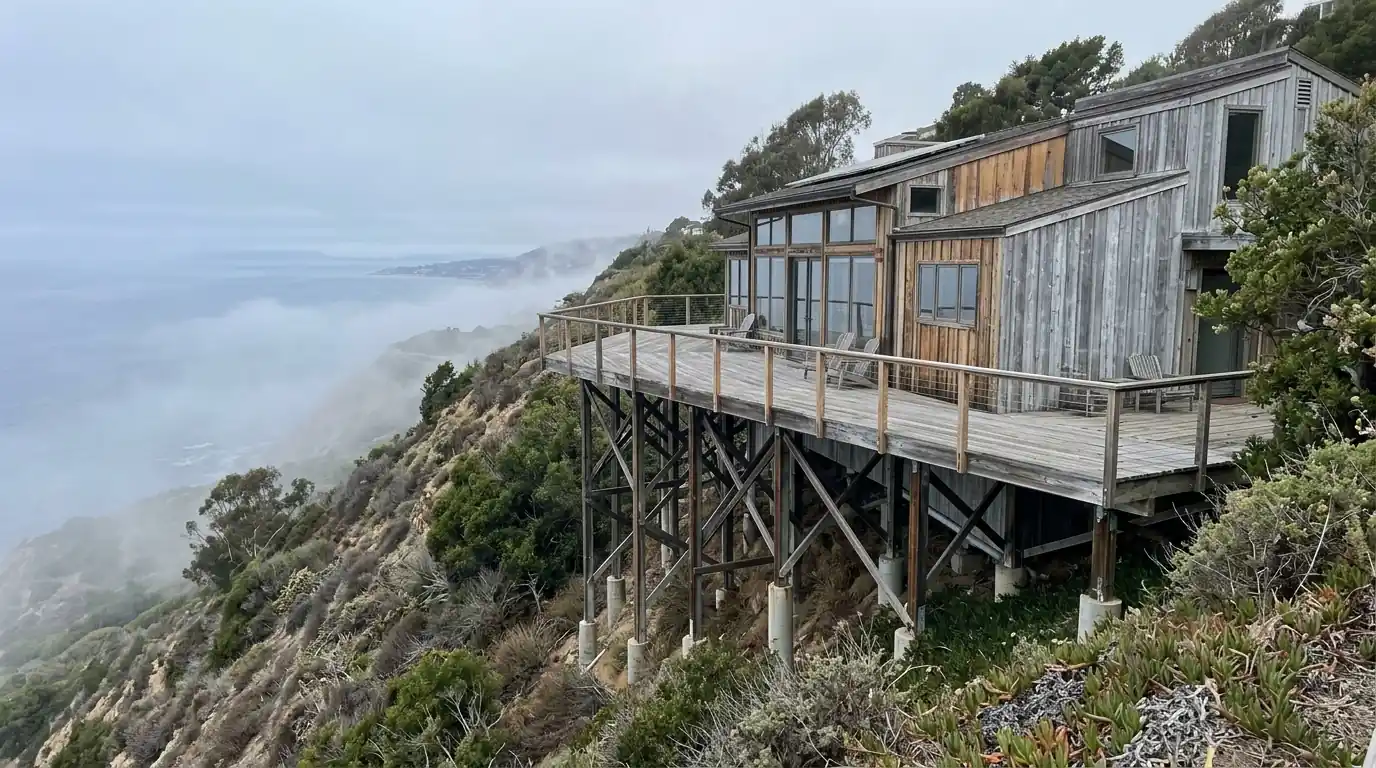
Fog, damp wood and dampwood termites
The peninsula sees heavy fog in late spring and early summer, the season locals call May Gray and June Gloom, and the hills closest to the ocean can stay socked in for days. Wood that rarely dries out, especially where it touches soil, sits under a leaky deck surface or catches irrigation, invites Pacific dampwood termites and wood decay fungus.
Dampwood termites are large, and their pellets are bigger than those of drywood termites. They do not need a soil connection, only wet wood. The lasting fix is to stop the moisture, replace the damaged wood and lift new lumber off the soil. In many RPV homes, we pair termite treatment with deck and siding repair, and we recommend checking post bases and ledger boards where decks attach to the house.
Canyons, open space and wildlife
The city includes large natural areas, from the Portuguese Bend Reserve to the canyons that cut down to the ocean. Homes on the edges of these open spaces live close to wildlife. Roof rats travel through the brush and trees and into attics, gophers tunnel through landscaped slopes and lawns, and ground squirrels can undermine retaining walls and hillside plantings.
Rodent work here focuses on exclusion: sealing roof gaps, attic vents, gaps under decks and openings around utilities. Trapping follows once entry points are closed. For gophers, trapping in active tunnels and wire barriers under new plantings protect the landscaping that holds hillside soil in place.
Tenting on a slope
Fumigating a hillside home takes more planning than a flat lot. Tarps have to seal against the ground on a slope, multi-level decks and steep roof pitches need careful coverage, and access for equipment can be limited by narrow driveways and winding streets. We walk the property ahead of time to plan the tarp layout and staging.
Preparation follows the usual steps: bag food and medicine, remove plants and pets, open interior doors and cabinets, and arrange the gas shutoff. Plants near the walls are trimmed back and the soil watered. The household is typically out for two to three days, with clearance testing before re-entry.
What we treat most in Rancho Palos Verdes
Dampwood termites
Large termites in fog-soaked deck posts, ledger boards and siding bases on hillside homes facing the ocean.
Drywood termites
Colonies in exposed beams, wide eaves and attic framing of 1950s to 1970s peninsula homes.
Wood decay fungus
Softens deck framing, siding and trim where marine fog and irrigation keep wood wet for long periods.
Roof rats
Travel from canyon brush and open space into attics and under decks of homes on the edges of natural areas.
Gophers
Tunnel through landscaped slopes and lawns, damaging plantings and irrigation that help hold hillside soil.