Quick answer
In South Gate we often tent bungalows whose attics, porches and back houses all carry drywood termites, treat subterranean activity under older raised floors, and help families with bed bugs and cockroaches in duplexes and converted units. Day-biting Aedes mosquitoes breed in backyard containers across the city. We plan tenting around shared lots and gas service, use targeted treatments for indoor pests, and walk yards to remove standing water.
Older bungalows with a second house in back
South Gate grew as a working city next to the river and the large factories that once stood here, and its residential blocks reflect that. Early bungalows and small postwar homes sit on narrow, deep lots, and many properties have a second dwelling, a converted garage or an added room in the back. Some of these structures were built decades apart and framed with very different lumber.
Drywood termites rarely respect property lines between front and back houses. We often find pellets in the front house attic, in the porch beams and in the rafters of the back unit or garage on the same lot. When activity is widespread, tenting both structures together prevents one from reinfesting the other. When it is limited, local treatment can be the better value. The inspection covers every building on the parcel so the plan reflects the whole property.
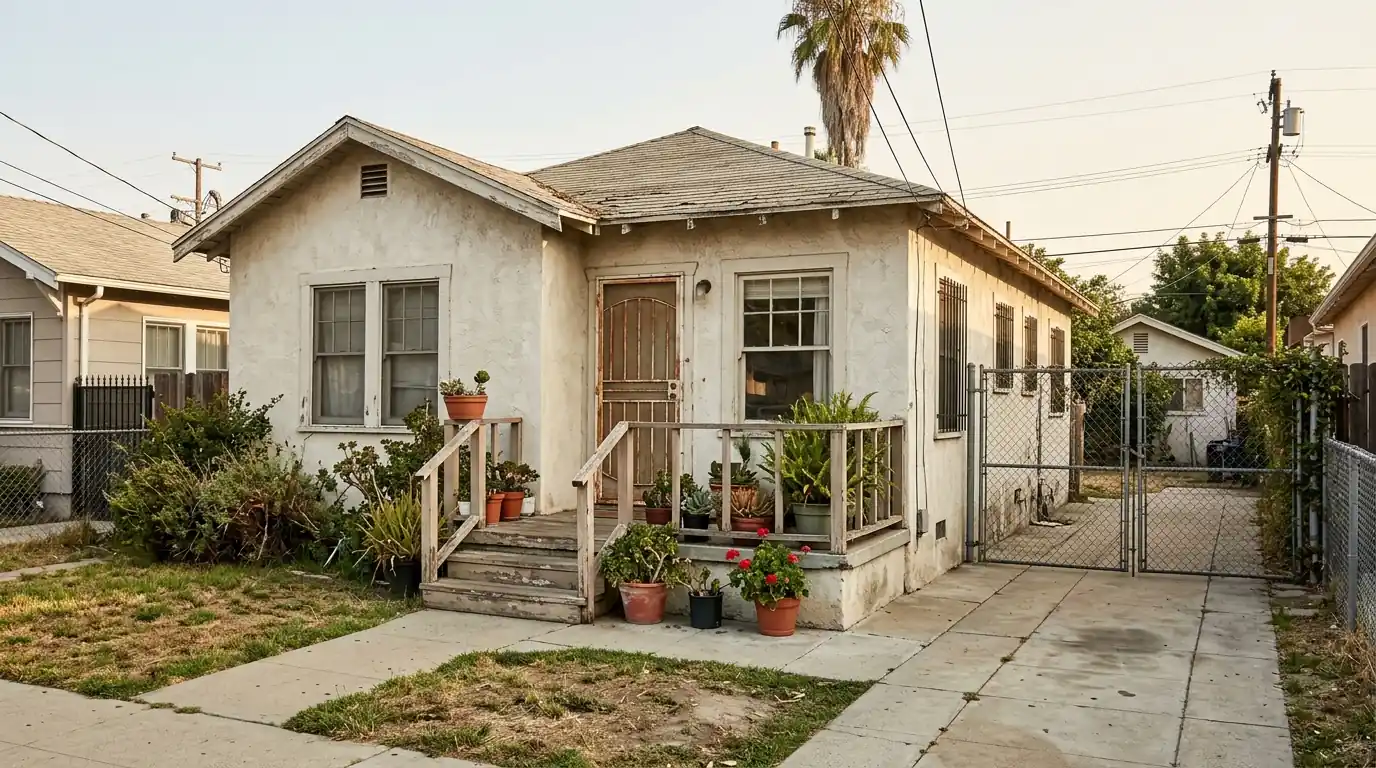
Coordinating fumigation on a shared lot
Tenting is straightforward on a detached house with space around it, but South Gate lots can be tight, with fences on the property line, tall hedges and back houses close to the main one. Before the day, we check where tarps can go, trim back plants, and plan for the residents of each unit. Everyone leaves for about two to three days, food and medicine go into fumigation bags or out of the house, and the gas company shuts off and later relights appliances.
Families with back-house tenants need to plan lodging for everyone. We provide a written prep list for each household and confirm every unit is empty before the gas is released. Re-entry happens only after clearance testing.
Bed bugs and cockroaches in duplexes and back units
Multi-unit properties, including duplexes, courtyard apartments along the major boulevards and converted back units, see a steady share of bed bug and German cockroach problems. Bed bugs travel in luggage, used furniture and secondhand mattresses, then spread through shared walls. German cockroaches move between kitchens through plumbing. Treating just one unit often fails because the source sits next door.
For bed bugs we combine careful inspection, targeted treatment of beds, furniture and baseboards, and follow-up visits, with clear prep instructions for laundering and decluttering. For cockroaches we use baits and growth regulators rather than sprays that scatter them.
Mosquitoes breeding in backyard water
Invasive Aedes mosquitoes, the small black and white ones that bite during the day, are now common in southeast Los Angeles County. They lay eggs in tiny amounts of water: plant saucers, buckets, tires, toys, clogged gutters and the bases of potted plants. South Gate yards with gardens, shaded patios and stored items give them plenty of places to breed.
We walk the yard to find and empty breeding sites, treat shaded resting areas where adult mosquitoes hide, and suggest routines like tipping containers weekly. The regional vector control district also monitors these mosquitoes and can answer questions about the wider neighborhood.
What we treat most in South Gate
Drywood termites
Colonies spread across front houses, back units and garages on the same narrow lots, with pellets in attics, porch beams and rafters.
Aedes mosquitoes
Small black and white day biters breeding in plant saucers, buckets and other backyard containers across the city.
Bed bugs
Moving between duplex units and back houses in luggage, used furniture and mattresses, then hiding in bed frames and baseboards.
German cockroaches
Spreading through shared plumbing walls in duplexes and small apartment buildings along the main boulevards.
Western subterranean termites
Mud tubes on piers and stem walls under older raised-floor bungalows, especially near damp soil by garden beds.