Quick answer
Bellflower is roughly eleven miles from our Long Beach office and a short drive from our Downey headquarters. Our work there is split between multifamily pest control, where German cockroaches, bed bugs and rodents move between units, and termite work on the 1940s and 1950s houses and the wood-framed apartment buildings along Bellflower Boulevard and the side streets.
Apartments on every other lot
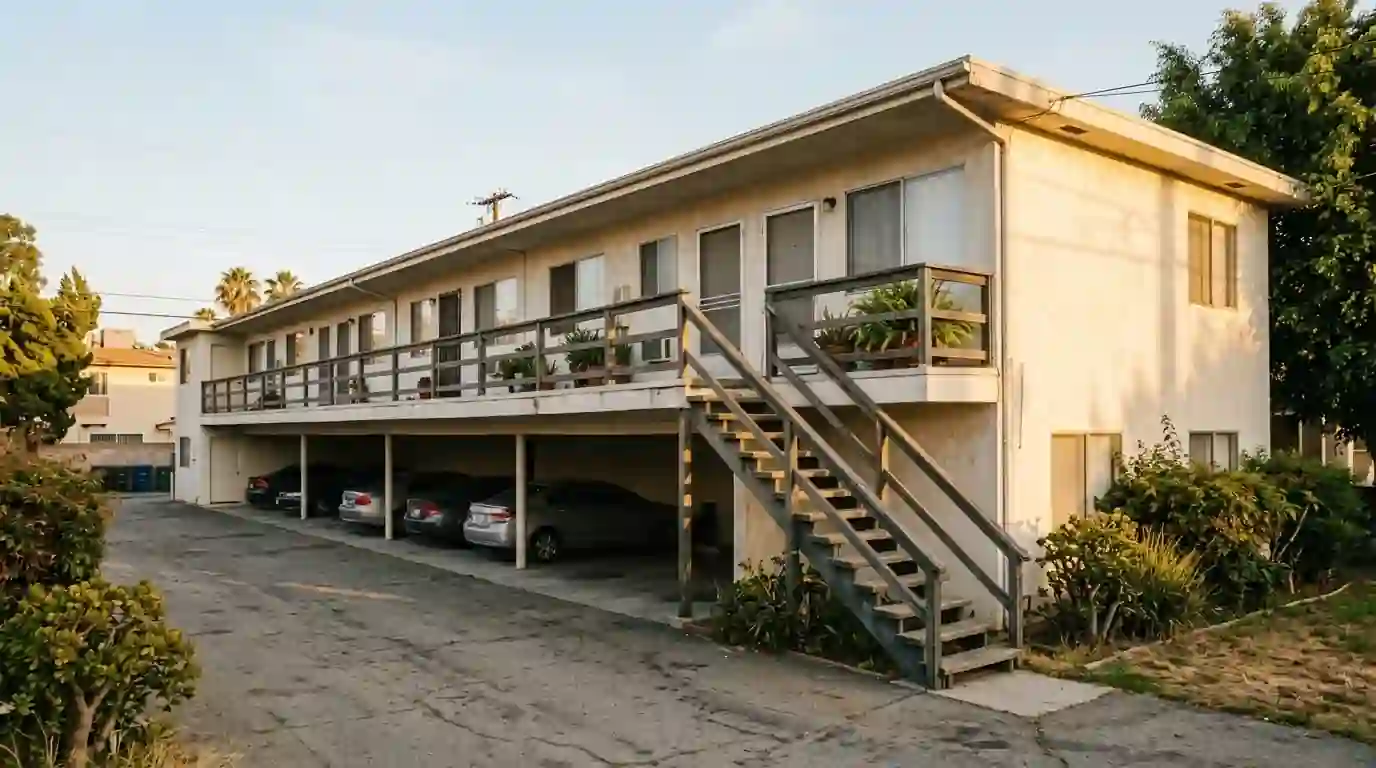
Bellflower grew fast after World War II, first with modest single-family homes and then with small apartment buildings that went up on deep lots behind or in place of the original houses. Drive any side street off Bellflower Boulevard and you will see two-story stucco buildings with eight or twelve units, carports underneath or at the back, and exterior wood stairs and walkways.
Those buildings are where most of our pest calls start. German cockroaches travel between kitchens through plumbing chases and wall voids. Bed bugs spread when a resident brings in used furniture or when an infested unit is vacated and its contents carried down the shared stairs. Treating one unit without checking the ones beside, above and below it rarely works for long.
How we handle cockroaches and bed bugs in a building
For German cockroaches, we start by inspecting the reporting unit and the adjacent units, focusing on kitchens and bathrooms. Gel baits placed in cracks near harborage, insect growth regulators and careful sealing of gaps around pipes do most of the work, with follow-up visits until counts drop. Sprays alone tend to scatter roaches into the next apartment.
Bed bug work begins with a close inspection of beds, couches and baseboards. Treatment can include heat, targeted products and steam, and it depends on residents preparing units by laundering bedding and clearing clutter. Owners and managers get a written summary of what was found in each unit so they can track the building over time.
Termites in the wooden parts of multifamily buildings
Wood exterior stairs, landings, balcony railings and carport beams are common in Bellflower apartments, and they take the brunt of the weather. Drywood termites settle into the protected parts of that wood, under stair treads and inside beam ends, while dampwood termites and fungus damage appear where water pools on landings or drips from a balcony.
Inside the building, drywood colonies spread through the shared attic. Because a whole building can be fumigated under one tarp, tenting is often the practical choice when activity shows up in several units. Every resident has to leave for about two to three days, so owners usually plan the date well in advance with the tenants.
Single-family homes off the boulevard
Bellflower's houses are mostly 1940s and 1950s single-story homes, some on raised foundations and many on slab. The raised ones have crawlspaces where we look for subterranean mud tubes on piers and stem walls and for moisture under bathrooms. The slab homes need checks at plumbing penetrations and garage edges.
Roof rats live in the older backyard trees and travel fence lines between lots, and Argentine ants arrive each summer as the inland heat builds. Drywood swarms come in late summer and early fall, often noticed on window sills after a hot afternoon.
What we treat most in Bellflower
German cockroaches
Move between apartment kitchens through plumbing chases and wall voids, so every unit around the reporting one gets checked.
Bed bugs
Spread through shared stairs and hallways in multifamily buildings, often after used furniture comes in or a unit turns over.
Drywood termites in stairs and carports
Colonies in protected parts of exterior wood stairs, landings and carport beams, plus shared attic framing.
Roof rats
Live in older backyard trees on deep lots and use fence lines and carport roofs to reach attics.
Subterranean termites
Mud tubes on crawlspace piers under raised 1940s homes and at plumbing penetrations in slab houses.