Quick answer
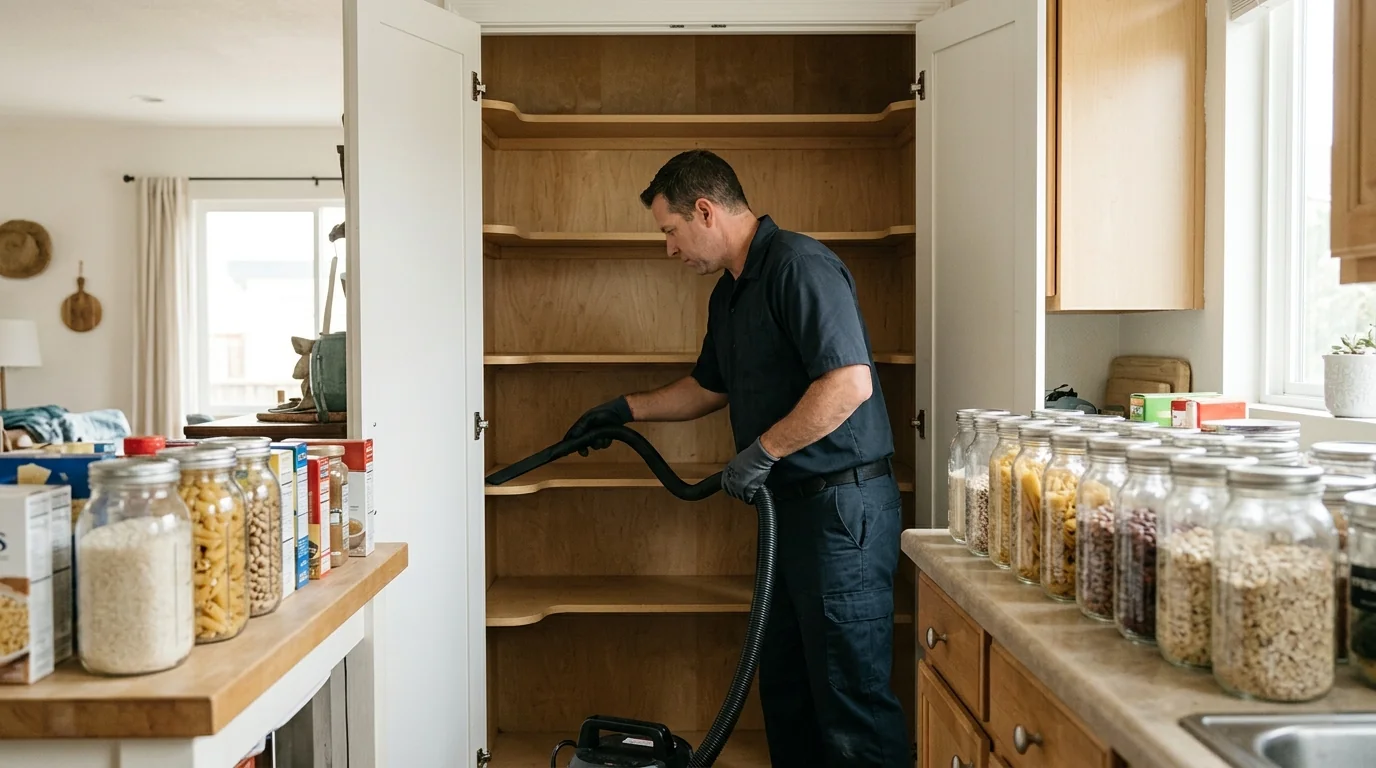
Pantry pests are solved by finding and discarding every infested food package first, then treating the cracks and shelf joints where larvae crawl off to pupate. We help you identify the insect, locate the source product, vacuum and treat shelf seams, hinge gaps and cabinet voids, and set pheromone monitoring traps for moths. Spraying without removing the source never works, because the breeding happens inside the food itself.
Stored product pests are a group of moths and beetles that complete their entire life inside dry food. The Indian meal moth is the one we see most in Long Beach kitchens: a small moth with copper-tipped wings whose caterpillars spin silk through cereal, nuts, dried fruit, birdseed and pet food. Beetles such as the sawtoothed grain beetle, red and confused flour beetles, cigarette beetles and drugstore beetles, plus rice and granary weevils, round out the list.
Most infestations arrive inside a package from the store or a warehouse, not from outdoors. One bag of birdseed or a forgotten box of pasta at the back of a shelf can produce hundreds of insects that move into neighboring packages and into the gaps of the cabinet itself. Our work is detective work first: find every infested item, clear the shelves, treat where wandering larvae hide, and help you store food so the cycle does not restart.
The hidden sources people miss
When a cleanout fails, it is almost always because one infested item stayed behind. Pantry insects are not picky, and some of their favorite foods are not in the pantry at all. Dog kibble in an open bag in the garage, a canister of birdseed, a bag of wild rice in a drawer, a forgotten spice jar, a bowl of decorative gourds or a dried flower wreath can all support a population.
Rodent bait stations and old mouse nests also hold grain that pantry beetles feed on. Cracks under the bottom shelf where cereal spilled years ago keep producing insects after every package has been tossed. That is why we empty shelves completely and look in places beyond the kitchen.
- Dry pet food and treats, especially in large open bags
- Birdseed, chicken feed and grass seed in the garage or shed
- Spices such as paprika, chili powder and turmeric
- Dried flower arrangements, potpourri and seed crafts
- Chocolate, cocoa, nuts, dried fruit and granola
- Crumbs and spilled grains under shelves and behind the stove
What pantry pest activity looks like before you find the source
Small moths at dusk
Indian meal moths fly in a zigzag pattern in the kitchen in the evening and rest on ceilings and upper cabinet walls during the day.
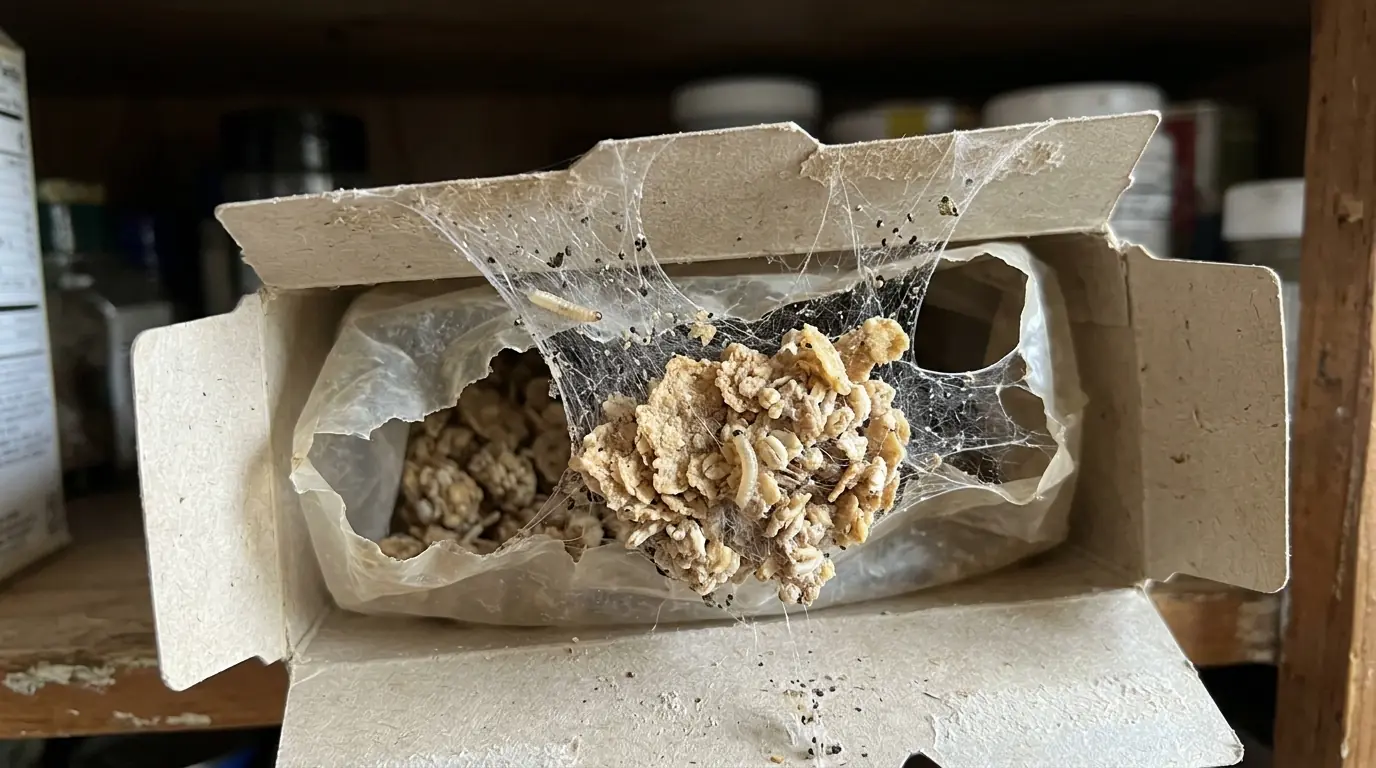
Silk webbing in food
Clumped cereal, rice or flour held together with fine silk threads, often with frass, is a sure sign of moth larvae feeding inside.
Caterpillars on the ceiling
Cream-colored larvae climbing walls or cabinet doors are looking for a crack to spin a cocoon, which means the infestation is mature.
Tiny beetles in flour
Reddish brown beetles about an eighth of an inch long in flour, cake mixes or spices point to flour beetles or drugstore beetles.
Holes in packaging
Pinhole exits in cardboard boxes, paper bags and even thin plastic film show where adult beetles chewed their way out.
Weevils in rice or beans
Small snouted beetles in whole grains, rice, dried corn or beans develop inside individual kernels and leave hollowed grains behind.
How we clear an infested pantry and keep it clear
Identify the insect
We confirm whether you have moths, flour beetles, grain beetles, weevils or cigarette beetles, because each prefers different foods and that tells us where to look for the source.
Inspect every food item
Together we open and check dry goods: cereal, flour, rice, pasta, nuts, dried fruit, spices, tea, cocoa, pet food, birdseed and decorative items such as dried flower arrangements and potpourri.
Remove infested products
Anything with webbing, live insects, larvae or exit holes is bagged and taken outside to the trash. Questionable items can be frozen for several days to kill hidden stages.
Vacuum shelves and seams
With shelves empty, we vacuum crumbs and larvae from shelf pin holes, corners, joints, hinge gaps and the space under the bottom shelf, where spilled food collects.
Treat cracks and voids
We apply a labeled crack and crevice treatment into shelf joints and cabinet voids where larvae pupate, keeping product off food contact surfaces.
Set moth monitoring traps
Pheromone traps placed near the pantry catch male moths and show whether activity is dropping or a missed source is still producing adults.
What pantry pest service costs in Long Beach
Pricing reflects how many cabinets and storage spaces are involved and whether pet food, birdseed or garage storage is part of the problem. A single cabinet is a short visit; a walk-in pantry plus a garage full of bulk goods is a longer one.
| Typical job | Typical range |
|---|---|
| Kitchen pantry cleanout and treatment | $165 to $295 per visitInspection, source removal guidance, vacuuming and crack treatment of kitchen cabinets. |
| Pantry plus garage or bulk storage | $245 to $415 per visitAdds garage shelving, pet food bins, birdseed storage and laundry room cabinets. |
| Pheromone monitoring program | $45 to $95 per visitTrap placement and replacement checks over the following months. |
| Commercial dry storage room | $285 to $585 per visitRestaurant or market dry storage, shelving units and floor drains. |
What moves the price
- Number of cabinets, pantry shelves and storage areas holding dry food
- Whether the source is pet food, birdseed or bulk goods stored in the garage
- Type of insect, since moths and beetles call for different follow-up
- How long the infestation has been building and how far it has spread
- Whether monitoring traps and a follow-up visit are needed
These are typical ranges to help you plan, not a quote, and the inspection sets the actual price. Compare more jobs in the treatment price guide.
Storing food so moths and beetles cannot spread
Paper bags, cardboard boxes and thin plastic film do not stop pantry insects. Moth larvae and many beetles chew through them, and newly hatched larvae are small enough to slip through gaps in folded box tops. Once one package is infested, everything around it is at risk.
Moving dry goods into glass jars or rigid plastic containers with gasket lids stops that spread. If something does get infested, it stays contained in one jar where you notice it, instead of moving shelf to shelf. Buy bulk items in amounts you will use within a few months, rotate older stock forward, and freeze new flour or grain for four days after buying if you have had repeat problems.
Wiping shelves and vacuuming the corners every few months removes the crumbs that support beetles. Keep pet food in a sealed bin rather than the original bag, and store birdseed outdoors or in a separate metal can away from the kitchen.
Why spraying the pantry alone does not work
Insecticides are never applied to food or food contact surfaces, and the larvae inside a bag of rice are protected from anything sprayed on the outside. Spraying shelves without removing the source kills a few wandering insects while the colony inside the package keeps producing adults.
Our crack and crevice treatment targets something specific: the larvae that leave food to pupate in shelf joints, hinge gaps and cabinet voids, and adults that rest in those cracks. That breaks the cycle at the points the source removal cannot reach. Pheromone traps then tell us whether the job is finished. If traps keep catching moths after several weeks, a source is still out there, and we go looking again rather than reapplying product.
Pantry pests in Long Beach homes and small food businesses
Indian meal moths are a year-round problem here because Long Beach kitchens rarely get cold enough to slow their development. In the warm months from June through September, a single infested package can produce a new generation in about four to six weeks. Older kitchens in Bixby Knolls, California Heights and Belmont Heights, with original built-in cabinets, have deep shelf gaps and toe kick voids where crumbs and larvae collect for years.
In the ranch homes of Lakewood Village, Los Altos and the Plaza, we often trace the source to the garage, where pet food, birdseed and bulk purchases sit in open bags next to the laundry. Apartment kitchens in Downtown and Alamitos Beach are usually smaller jobs, though moths can drift between units in shared buildings. Corner markets and restaurants along Fourth Street and Anaheim Street see beetles in dry storage rooms, where bulk rice, flour and spices turn over constantly and health inspectors expect clean shelving.
Before we arrive for pantry service
- Do not throw everything away yet, so we can find the source together
- Clear the counters near the pantry so food can be sorted
- Have trash bags ready for infested products
- Gather pet food, birdseed and garage dry goods in one place
- Leave cabinet doors accessible and move items stored under the bottom shelf
Where we do pantry pest control
- Downtown Long Beach 90802
- North Long Beach 90805
- Belmont Shore 90803
- Bixby Knolls 90807
- California Heights 90807
- Los Altos 90815
- Naples 90803
- Rose Park 90804
- Wrigley 90806
- Signal Hill 90755
- Lakewood 90712
- Downey 90240
- Torrance 90503
- Carson 90745
- Compton 90220
- Norwalk 90650
- Bellflower 90706
- Garden Grove 92840
- Westminster 92683
- Seal Beach 90740
- Cerritos 90703
- Whittier 90601
Not listed? We cover all of Long Beach and the nearby cities; call and we will confirm your street.
Pantry Pest Control questions
Where do pantry moths come from in the first place?
Most come home in a package that was infested at a warehouse, store or processing plant, often in birdseed, pet food, nuts, dried fruit or grains. Eggs and tiny larvae are hard to see. Once at home, the moths spread to nearby packages and lay eggs in cabinet cracks, so one item can infest a whole pantry.
Is food with a few weevils or moth larvae safe to eat?
Accidentally eating a few pantry insects is not known to be harmful, but infested food is contaminated with silk, shed skins and droppings and should be thrown out. More importantly, keeping it in the house feeds the next generation. Discard anything with webbing, live insects or exit holes.
Do pheromone traps get rid of pantry moths by themselves?
No. Traps attract and catch male moths, which reduces mating a little and shows you whether moths are still active, but they cannot reach the larvae feeding inside food. They work as a monitoring tool after the source has been removed and cracks have been treated.
Can freezing kill pantry pests in flour and grain?
Yes. Holding dry goods at freezer temperature for about four days kills eggs, larvae, pupae and adults in most stored food. It is a good way to treat items you are unsure about and to protect new bulk flour, grain or birdseed before storing it.
Why do I see moth caterpillars on my kitchen ceiling?
Mature Indian meal moth larvae leave the food to find a protected spot to spin a cocoon, and they often crawl long distances up walls and across ceilings. Seeing them means the infestation has been active for several weeks and the source package is still nearby.
Related services
General Pest Control
General pest control is a recurring service, usually every other month or quarterly, that treats the outside of the home to stop.
DetailsSilverfish Control
Silverfish thrive where humidity stays high and starchy food is easy: bathrooms, laundry rooms, garages, attics and boxes of paper or fabric.
DetailsRodent Control
Rodent control starts with knowing which animal you have: roof rats in attics and trees, Norway rats in alleys and under slabs.
DetailsCommercial Pest Control
Commercial pest control in Long Beach is a scheduled program built around the site: monthly or twice-monthly service for restaurants, rodent stations.
Details