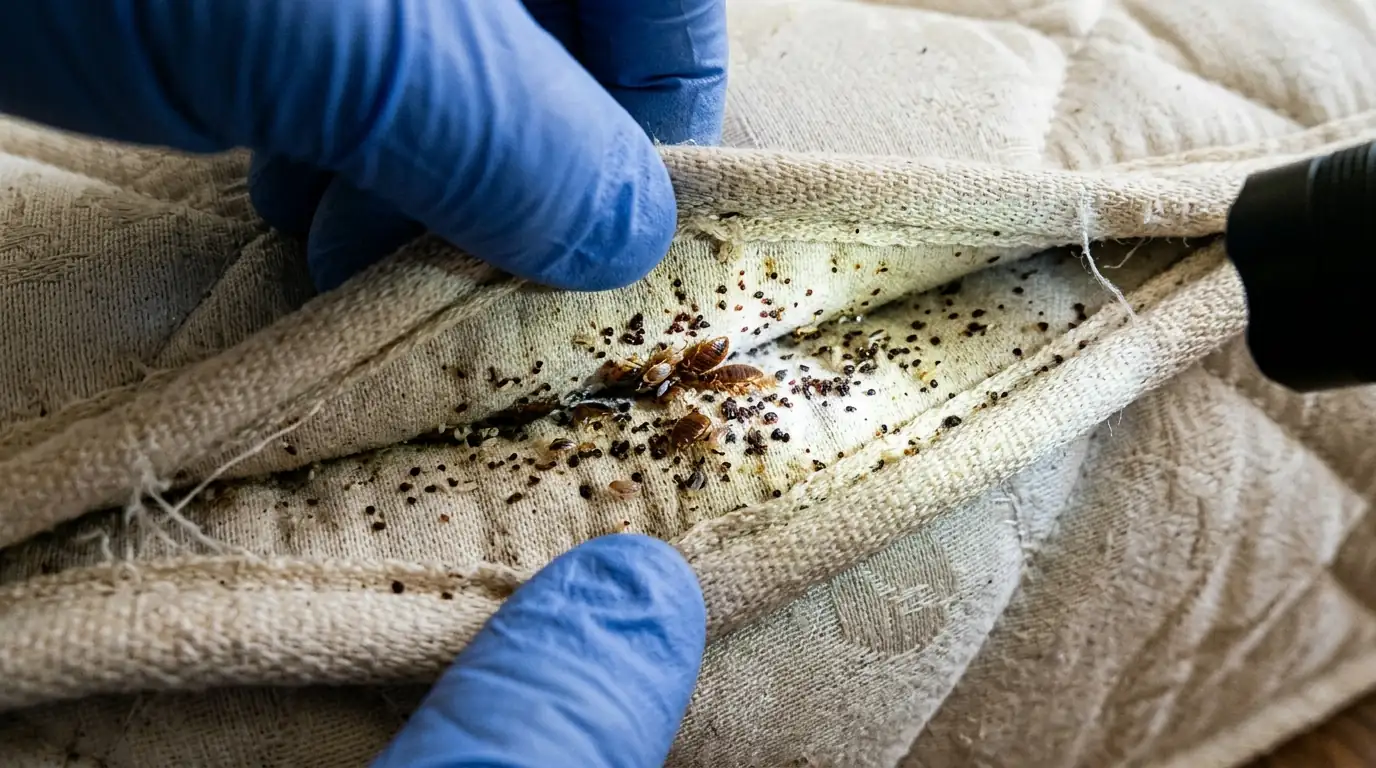
Quick answer
Bed bug treatment begins with a careful inspection to confirm bugs and map every room involved. Then we treat using one of two approaches: whole-unit heat that raises room temperatures high enough to kill all life stages in a day, or a targeted chemical program with two or three visits about two weeks apart. Both require preparation, especially laundering bedding on high heat, and a follow-up inspection to confirm the bugs are gone.
Bed bugs are small, flat, reddish-brown insects about the size of an apple seed as adults. They feed on blood at night and spend the day hidden in mattress seams, box spring frames, headboards, bed frames, nightstands, couch cushions and cracks in baseboards near where people rest. They do not fly or jump, but they travel easily in luggage, used furniture, backpacks and through shared walls in apartment buildings.
Having bed bugs has nothing to do with cleanliness. They show up in well-kept homes, new condos and nice hotels alike, carried in from travel, visitors or a neighbor's unit. What matters is catching them early and treating thoroughly, because a few missed eggs can restart the infestation within weeks. Store-bought foggers almost never work and tend to drive bugs into walls and adjoining rooms.
Signs of bed bugs to check before you call
Bites in a line or cluster
Itchy red welts in rows or groups on arms, neck, shoulders or legs. Some people do not react to bites at all, so bites alone are not proof.
Rusty or dark spots on bedding
Small reddish smears from crushed bugs, or dark ink-like dots of droppings on sheets, pillowcases and mattress seams.
Live bugs in seams and tufts
Adult bugs, pale nymphs or tiny white eggs along mattress piping, under labels and in box spring corners.
Shed skins near the bed
Translucent, empty skins left as nymphs grow, found in headboard joints, bed frame screw holes and nightstand drawers.
Activity on the couch
In homes where someone sleeps or naps on a sofa, bugs may settle in cushion seams and the underside frame.
Sweet, musty odor
Heavy infestations can produce a faint sweet or musty smell around the bed, though most homes never reach that point.
How we treat bed bugs from inspection to clearance
Inspect every sleeping area
We check mattresses, box springs, bed frames, headboards, furniture, baseboards, outlets and closets in each bedroom and resting area to map the infestation.
Choose heat or targeted treatment
Based on how widespread it is, the type of building and what you can prepare, we recommend whole-unit heat or a multi-visit targeted program and explain why.
Prepare the unit
Bedding and clothing are laundered and dried on high heat. Clutter is reduced so bugs have fewer places to hide, and heat-sensitive items are handled as we direct.
Treat the rooms
Heat treatment brings room and furniture temperatures up to a lethal level for several hours. Targeted treatment uses labeled products in seams, cracks, voids and furniture.
Encase mattresses
Bed bug proof encasements on the mattress and box spring trap any remaining bugs inside and make future inspection much easier.
Follow up and confirm
We return about two weeks later to inspect, and to treat again on a chemical program, until no live bugs, new spots or fresh skins are found.
How to prepare for bed bug treatment
- Wash and dry all bedding, clothing and linens on the highest dryer heat, then seal in clean bags
- Keep sleeping in your own bed so the bugs stay where we will treat
- Reduce clutter under beds and in closets so every surface can be reached
- Do not throw out furniture until we inspect it
- For heat treatment, remove candles, aerosols, medicines, plants and other heat-sensitive items as directed
- Vacuum floors and furniture, then seal and discard the vacuum bag outside
Heat treatment versus targeted chemical treatment
Both methods work when done properly. The right choice depends on the home, the people living there and how quickly the problem needs to be solved.
- Heat: kills eggs, nymphs and adults in one day; no residual; requires removing heat-sensitive items like candles, aerosols, medicines and some electronics
- Targeted chemical: less preparation for heat-sensitive items; leaves residual in cracks and voids; takes two or three visits over about a month
- Combined: heat for the main rooms with residual products applied to baseboards and outlets as a backstop
- Not recommended: foggers and bug bombs, which do not reach hiding spots and spread bugs to other rooms
Bed bugs in apartments and condos
Bed bugs travel through wall voids, electrical outlets, plumbing chases and hallways, so in multifamily buildings an infestation in one unit often means neighboring units should be inspected too. Treating one apartment while the one next door stays infested leads to reinfestation within weeks.
In California, landlords and tenants each have responsibilities when bed bugs appear in rental housing, including notice, access for inspection and treatment, and cooperation with preparation. For condo associations, inspecting units on either side, above and below the affected unit is a sensible first step. We can inspect several units in one visit and give the manager or HOA a clear picture of which units need treatment.
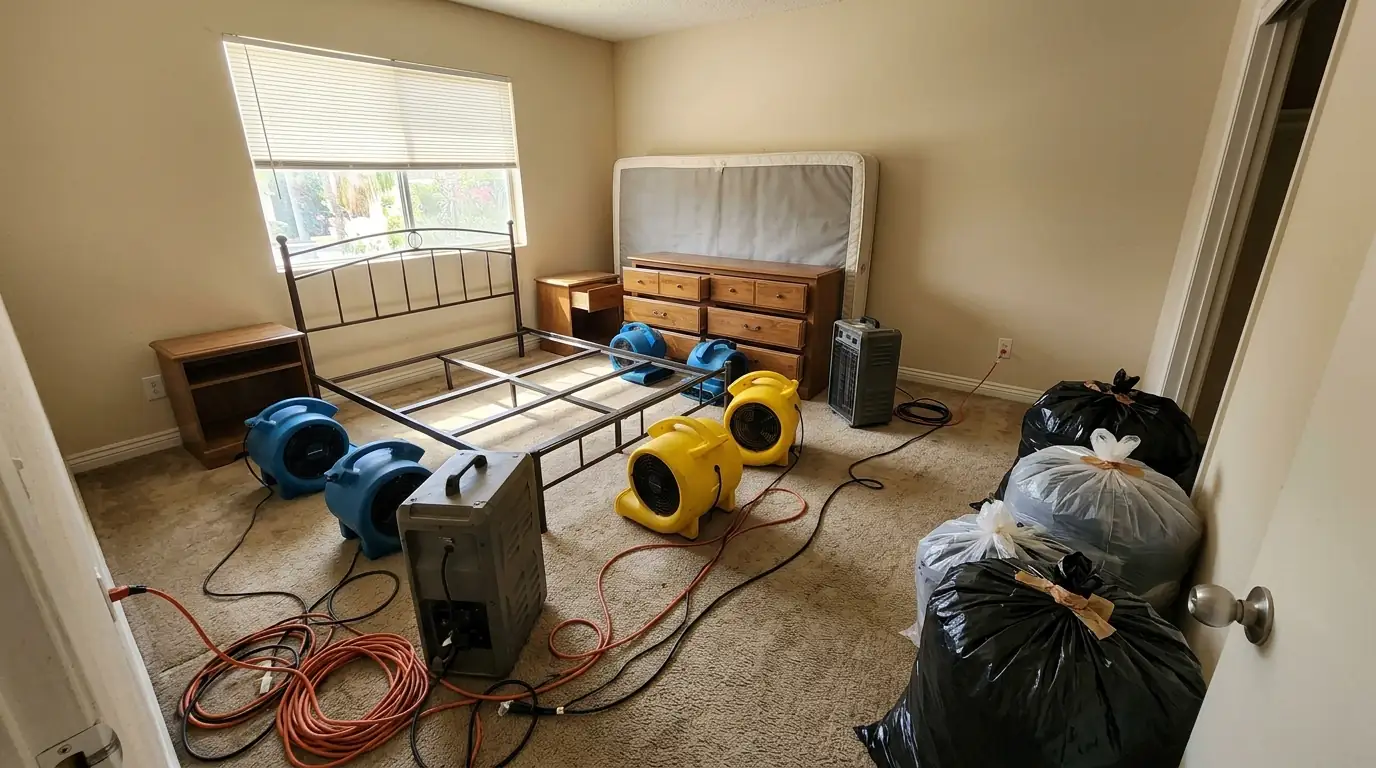
What bed bug treatment usually costs in Long Beach
Bed bug pricing depends on the method and the number of rooms involved. Heat costs more up front but usually finishes in one visit. Targeted treatment costs less per visit but needs two or three visits.
| Typical job | Typical range |
|---|---|
| Bed bug inspection | $125 to $245Room-by-room inspection with written findings and a treatment recommendation |
| Targeted treatment, per room | $285 to $545 per roomMulti-visit chemical program including follow-up visits for one bedroom |
| Whole-unit heat treatment | $1,185 to $2,940Single-day heat for an apartment or small home, priced by square footage |
| Mattress and box spring encasements | $85 to $195 per unitBed bug proof encasements for one bed, installed during treatment |
What moves the price
- Number of bedrooms and other rooms with activity
- Heat versus targeted chemical treatment
- Clutter levels that slow inspection and treatment
- Shared walls in apartments and condos that need adjoining units checked
- How long the infestation has been growing
These are typical ranges, not a quote, and the inspection sets the price for your home or unit. Compare more jobs in the treatment price guide.
Mistakes that make bed bugs harder to clear
The most common mistake is moving to another bedroom or the couch to escape bites. Bed bugs follow their hosts, and moving around spreads them to new rooms. Keep sleeping in the same bed so the bugs stay concentrated where treatment will reach them. Another mistake is throwing out the mattress in a panic before treatment, which costs money and can spread bugs through hallways and stairwells if the mattress is not wrapped.
Overusing store-bought sprays and alcohol is another problem. It rarely kills eggs, can be a fire hazard, and pushes bugs into deeper cracks. Finally, skipping the follow-up visit is risky. Eggs hatch over about one to two weeks, and the follow-up inspection is how we confirm the cycle is broken.
Bed bugs in Long Beach housing
Most bed bug calls in Long Beach come from multifamily buildings. The 1920s courtyard apartments and newer condo towers in Alamitos Beach and Downtown, and the apartment blocks along Ocean Boulevard, Broadway and Fourth Street, share walls and hallways that make it easy for bugs to travel between units. In North Long Beach and around Atlantic Avenue, older fourplexes and small apartment buildings are common sites as well.
Single-family homes see bed bugs too, usually after travel, a visiting guest, or a used couch or bed frame. With the airport, the cruise terminal, the convention center and Cal State Long Beach all bringing people in and out of the city, travel-related cases happen year round. Student rentals near the university in Los Altos and Park Estates sometimes need attention after the start of a semester when furniture changes hands.
Where we do bed bug treatment
- Downtown Long Beach 90802
- North Long Beach 90805
- Belmont Shore 90803
- Bixby Knolls 90807
- California Heights 90807
- Los Altos 90815
- Naples 90803
- Rose Park 90804
- Wrigley 90806
- Signal Hill 90755
- Lakewood 90712
- Downey 90240
- Torrance 90503
- Carson 90745
- Compton 90220
- Norwalk 90650
- Bellflower 90706
- Garden Grove 92840
- Westminster 92683
- Seal Beach 90740
- Cerritos 90703
- Whittier 90601
Not listed? We cover all of Long Beach and the nearby cities; call and we will confirm your street.
Bed Bug Treatment questions
How quickly can bed bugs spread through a home?
A small infestation can grow noticeably in a month or two, since females lay eggs daily and nymphs mature in a few weeks at warm room temperatures. They spread to other rooms when people move to sleep elsewhere or when bags and clothing are moved around. Early treatment keeps the job smaller.
Do I need to throw away my mattress after bed bugs?
Usually not. Most mattresses can be treated and then sealed in a bed bug proof encasement, which traps any survivors and protects the mattress going forward. Replacing a mattress without treating the room just gives the remaining bugs a new place to live.
Can bed bugs live in my car or office?
They can be carried into cars, offices and other places in bags and clothing, but they establish best where people rest for long periods, such as beds and couches. Occasional bugs in a car are possible after an infestation at home. Treating the home is the priority, and we can check other places if needed.
How long after heat treatment can I go back inside?
Usually the same evening once the unit has cooled to a comfortable temperature. Heat treatment leaves no product residue, so there is no waiting for anything to dry. You can put the laundered bedding back on the encased mattress that night.
What should a tenant do if bed bugs appear in a rental?
Tell the landlord or property manager in writing as soon as you see signs, and avoid moving furniture or belongings to other units. California law sets out duties for both landlords and tenants around inspection, notice and access. Cooperating with preparation instructions helps the treatment work the first time.
Related services
Flea Control
Lasting flea control in Long Beach means treating three places at the same time: the pet (through your veterinarian), the indoor areas.
DetailsGeneral Pest Control
General pest control is a recurring service, usually every other month or quarterly, that treats the outside of the home to stop.
DetailsCondo & HOA Termite Treatment
Condo and HOA termite treatment starts with an inspection of every unit and common area so the board knows where activity is.
Details