In this guide
- The quick look: what drywood frass actually is
- Myth: any brown dust near wood means termites
- Myth: a pile of pellets means the termites are right there
- Myth: if it has been there a while, it is not active
- Myth: sealing the hole will stop them
- Where frass shows up most in Long Beach homes
- What happens after you confirm it is termite frass
A small pile of grainy brown specks on a windowsill or the garage floor is one of the most common reasons people in Long Beach call about termites. Sometimes it is termite droppings, called frass. Sometimes it is sawdust, sand from a stucco wall, carpenter ant debris or simply dirt blown in from the street. Telling them apart takes a few minutes and a magnifying glass.
This guide is set up as a field check: what to look at first, the myths that cause people to misread what they see, and a simple process to confirm whether the pile is old or new.
Key takeaways
- Drywood frass is hard, uniform pellets with six flattened sides, in mixed shades of brown.
- Sawdust, stucco grit, carpenter ant shavings and beetle powder all look different under a lens.
- Look straight up from the pile to find the wood that produced it.
- Clean the pile and watch for new pellets over two to three weeks to confirm activity.
- Do not caulk, paint over or spray into kick-out holes before an inspection.
The quick look: what drywood frass actually is
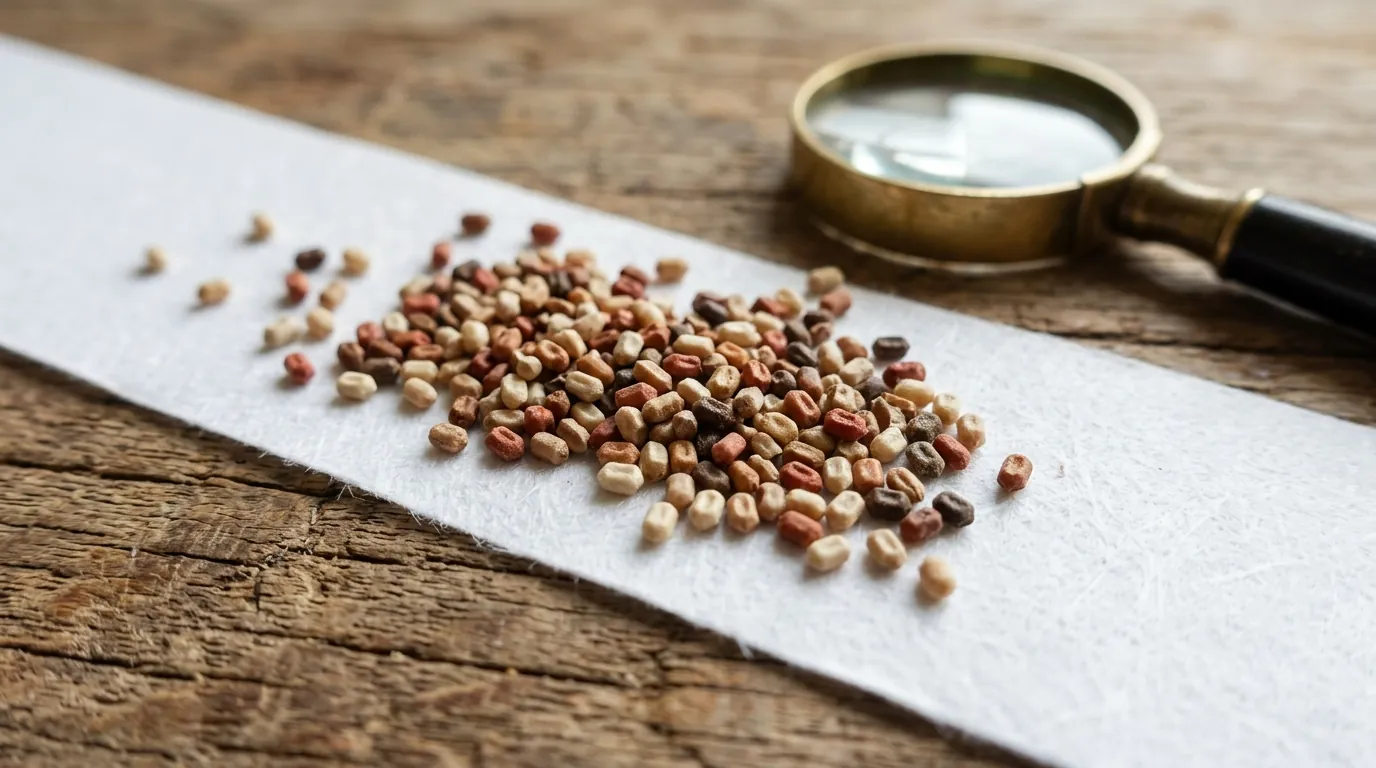
Western drywood termites live inside the wood they eat and keep their galleries clean by pushing fecal pellets out through tiny openings called kick-out holes. Those pellets fall straight down and pile up on whatever is below. Because the colony reuses the same holes, a pile can be surprisingly neat, almost like a small cone.
Each pellet is hard, about a millimeter long, and shaped like a tiny capsule with six flattened sides and rounded ends. Under a hand lens the ridges are easy to see. The color depends on the wood being eaten, so frass from the same house can range from cream to reddish to dark brown, and a single pile often shows a mix of shades.
- Hard, uniform pellets, not soft or powdery
- Six flattened sides with ridges along the length
- Mixed shades of tan, reddish brown and dark brown
- Often under a pinhole sized opening, sometimes sealed with a dark plug
Myth: any brown dust near wood means termites
Fact: several things look like frass at a glance. Fine sawdust from a recent project is fluffy and irregular, not hard and ribbed. Stucco and plaster grit is gray or tan sand with sharp edges, common under older Spanish and Craftsman windows in Long Beach. Spider and insect debris under a light fixture is mixed with legs and wings.
Carpenter ants push out shredded wood that looks like pencil shavings, often with bits of insulation and dead ant parts mixed in. Powderpost and other wood boring beetles leave very fine flour-like powder that sifts out of tiny round holes, usually in hardwood flooring, furniture or exposed beams. Each of these points to a different problem and a different fix, which is why a look under magnification matters.
Myth: a pile of pellets means the termites are right there
Fact: pellets fall from the kick-out hole, and the gallery that produced them may extend well beyond it. A pile on a garage floor may come from a rafter or ceiling joist directly above. A pile on a closet shelf may come from the header over the door. Look straight up from the pile and trace the wood above it before deciding where the colony is.
Pellets can also travel. They roll off sloped sills, get caught in spider webs and drift along attic insulation. In attics with blown-in insulation, piles often show up as small dark spots on the insulation surface below a beam.
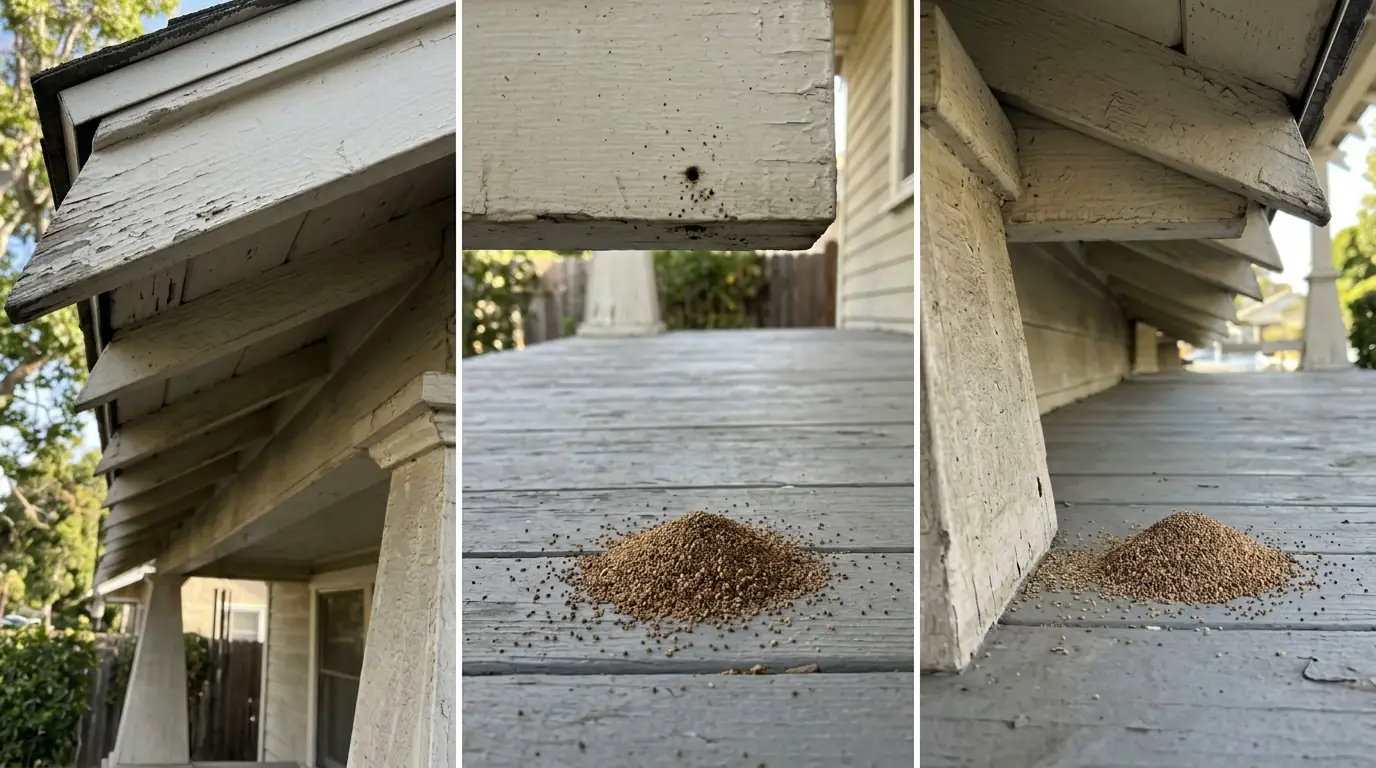
Myth: if it has been there a while, it is not active
Fact: old frass and fresh frass look almost the same. Pellets do not decay and can sit in a wall cavity or attic for decades. An old pile can be left from a colony that was treated years ago, or it can be from a colony that is still working. The only reliable way for a homeowner to tell is to clean the pile and watch for new pellets.
That sweep test is simple and worth doing before an inspection, because it gives the inspector a timeline as well as a location.
- Photograph the pile and the wood above it
- Save a spoonful in a sealed bag for the inspector
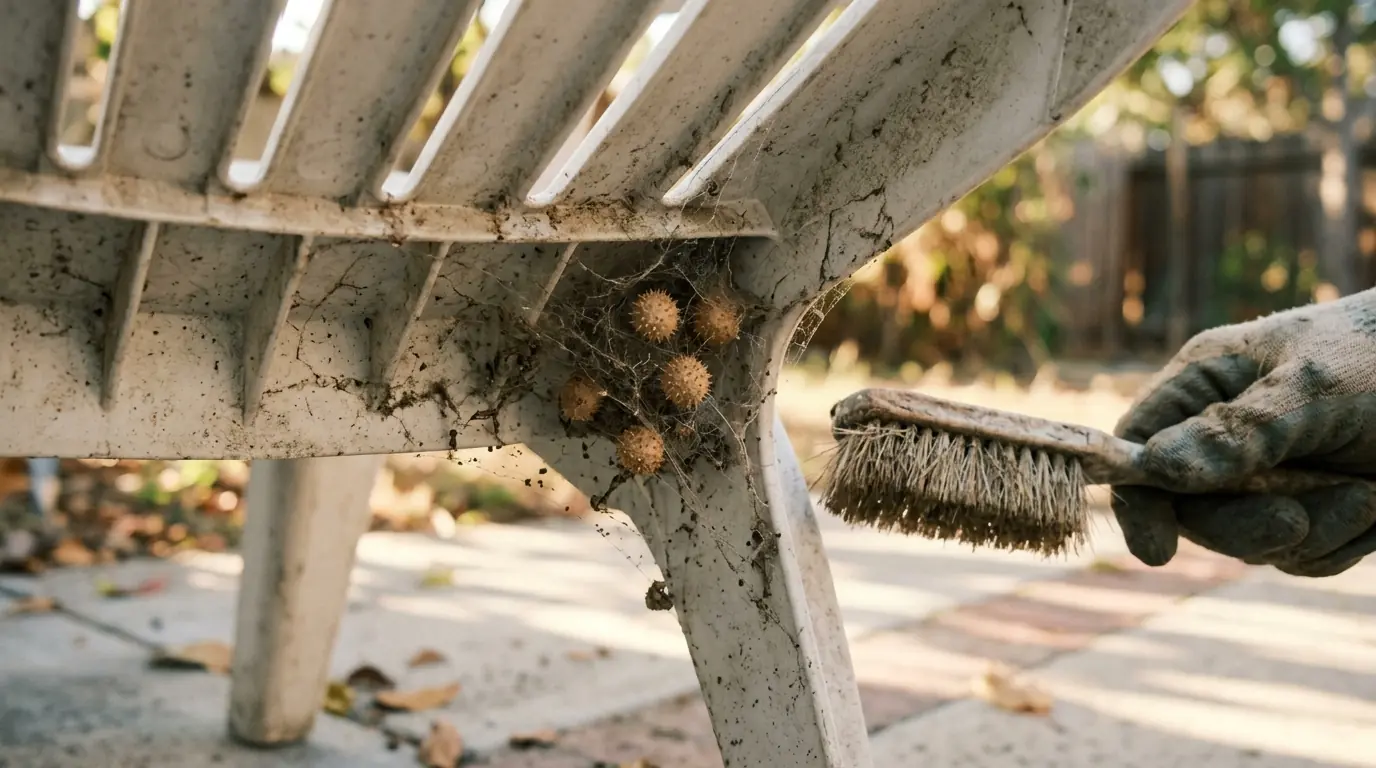
- Sweep or vacuum the rest completely
- Lay a sheet of white paper or tape a square of paper in the spot
- Check every few days for two to three weeks; new pellets mean an active colony
Myth: sealing the hole will stop them
Fact: covering a kick-out hole with caulk, wood filler or paint does not kill the colony. It only stops the frass from appearing where you can see it. The termites simply open a new hole nearby, sometimes in a spot that is harder to find. Patching before treatment also makes the inspection less accurate because it hides the clues.
The same goes for store-bought sprays squirted into the hole. Most do not travel far enough into the galleries to reach the colony, and they can leave a residue that complicates later treatment.
Where frass shows up most in Long Beach homes
In raised bungalows in Bluff Park, Belmont Heights and California Heights, the classic spots are window sills, the tops of baseboards, the floor beneath exposed rafter tails on a porch, and the floor of a detached garage. In Spanish style homes in Bixby Knolls, check under exposed wood beams, around arched door headers and beneath decorative corbels outside.
In 1950s slab ranches in Los Altos and El Dorado Park Estates, look at garage ceiling framing, the water heater closet, sliding door trim and patio covers. In condos and courtyard apartments downtown and in Alamitos Beach, pellets often turn up on balcony decks, inside kitchen cabinets on an exterior wall, and along window frames facing the ocean breeze. Furniture deserves a look too: antique dressers and chairs brought from another home sometimes carry colonies of their own.
What happens after you confirm it is termite frass
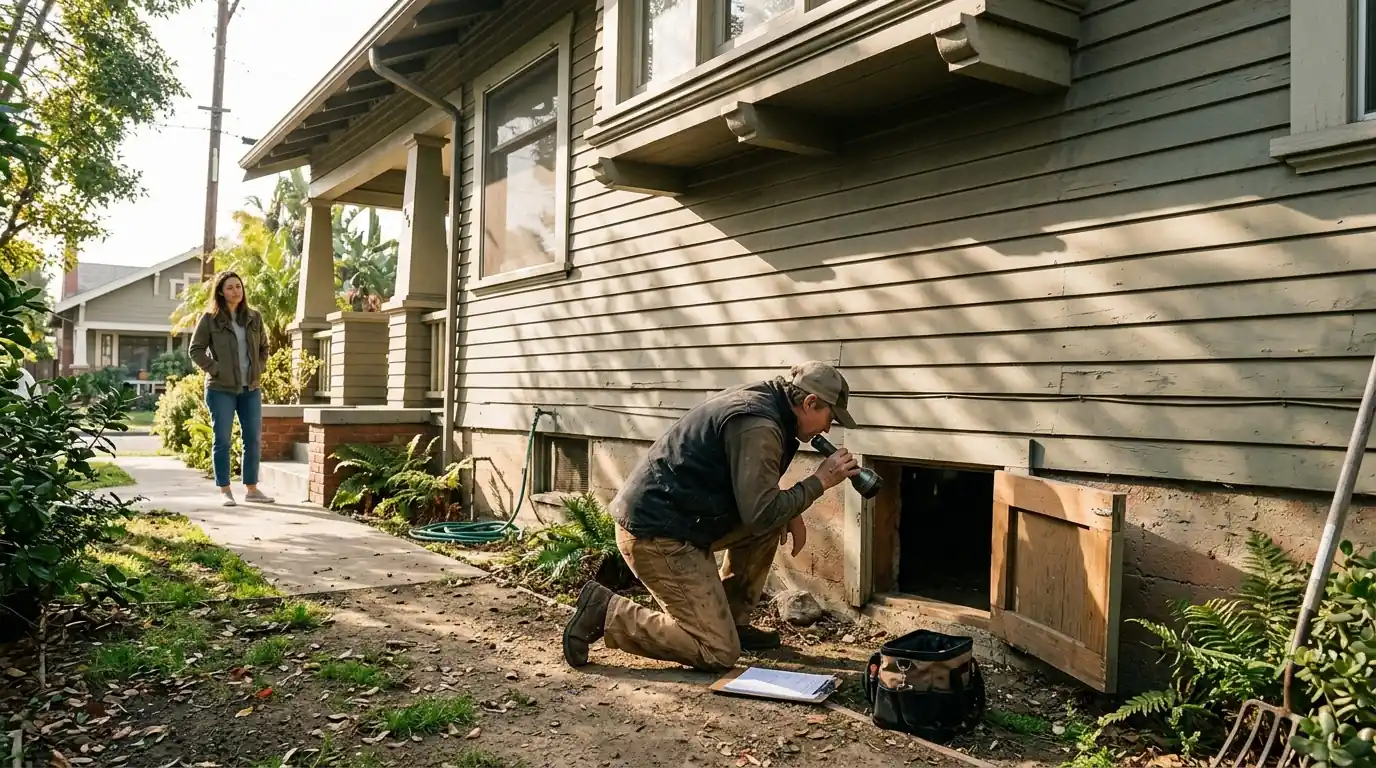
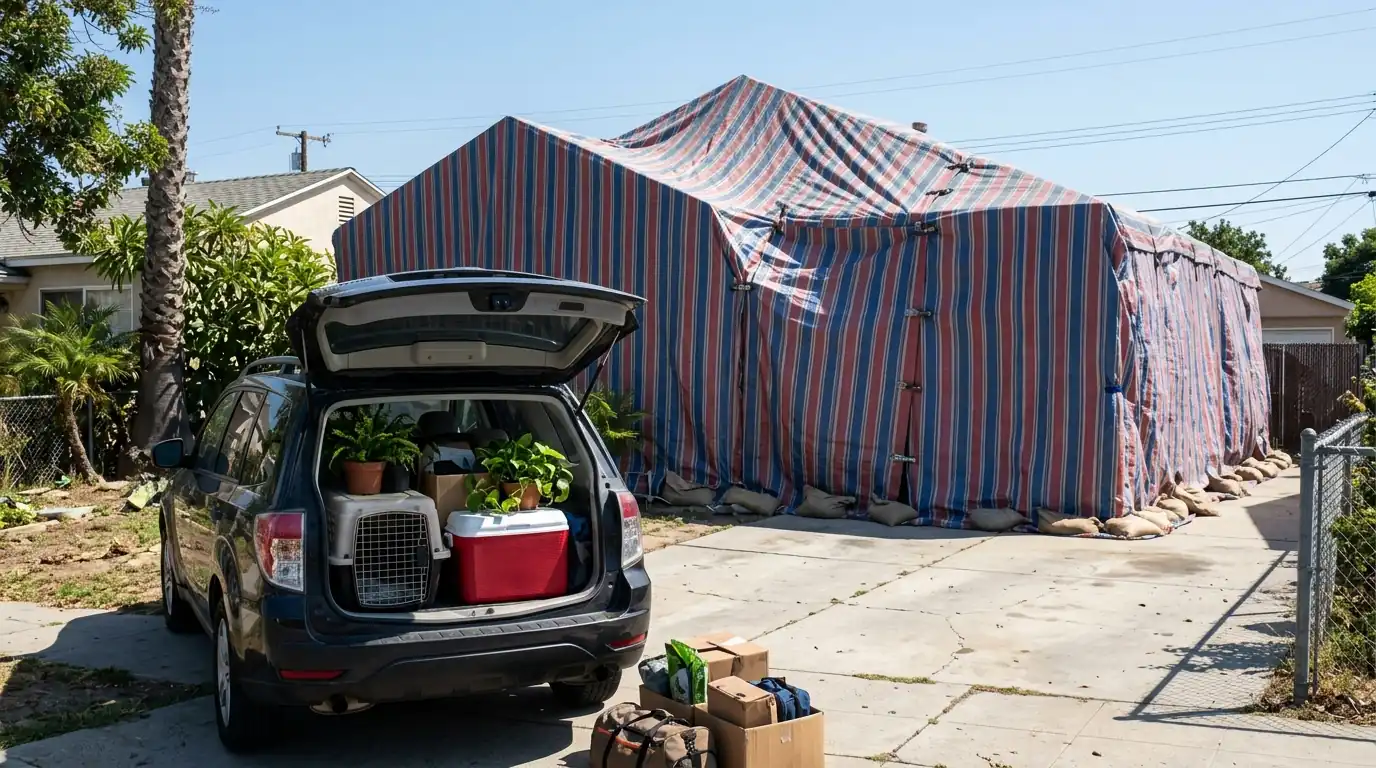
Once frass is confirmed and the sweep test shows new pellets, the next step is a full inspection, not a spot treatment of the one place you found. The inspector checks the attic, garage, eaves, windows, doors and accessible framing to count how many separate areas are active. That count, and how much wood can be reached, decides between local treatment such as drill and inject or orange oil, and a whole-structure treatment such as fumigation or heat.
Bring your photos, the sealed sample and your notes on dates. If you want to describe what you found first, a person answers at (562) 636-0445 at any hour.
Reader questions
Is termite frass harmful to touch or breathe?
Frass is digested wood and is not considered toxic. Some people with allergies or asthma may react to the dust from a large pile, the same way they might react to other household dust, so wear gloves and use a vacuum rather than sweeping into the air. Keep the sample you save sealed, and wash your hands afterward as a basic precaution.
I keep finding pellets on the same windowsill after cleaning, how urgent is it?
New pellets appearing in the same place means an active drywood colony, but drywood termites work slowly compared with subterranean termites. It is a reason to arrange an inspection within the next few weeks, not an overnight emergency. The real concern is how many other colonies exist in the house, which is what the inspection is meant to answer.
Can I tell drywood and dampwood termite pellets apart?
Yes, mostly by size and setting. Pacific dampwood termite pellets are noticeably larger and are found in wet, decaying wood such as a rotting deck post, dock lumber or a leaking shower wall. Drywood pellets are smaller and come out of sound, dry wood. In Long Beach, dampwood frass is most common around the canals in Naples and the marinas.
Written by Celeste Goodwin, Termite Guides Editor at Exquisite Termite Control.