In this guide
- What the fumigant actually does inside the tarps
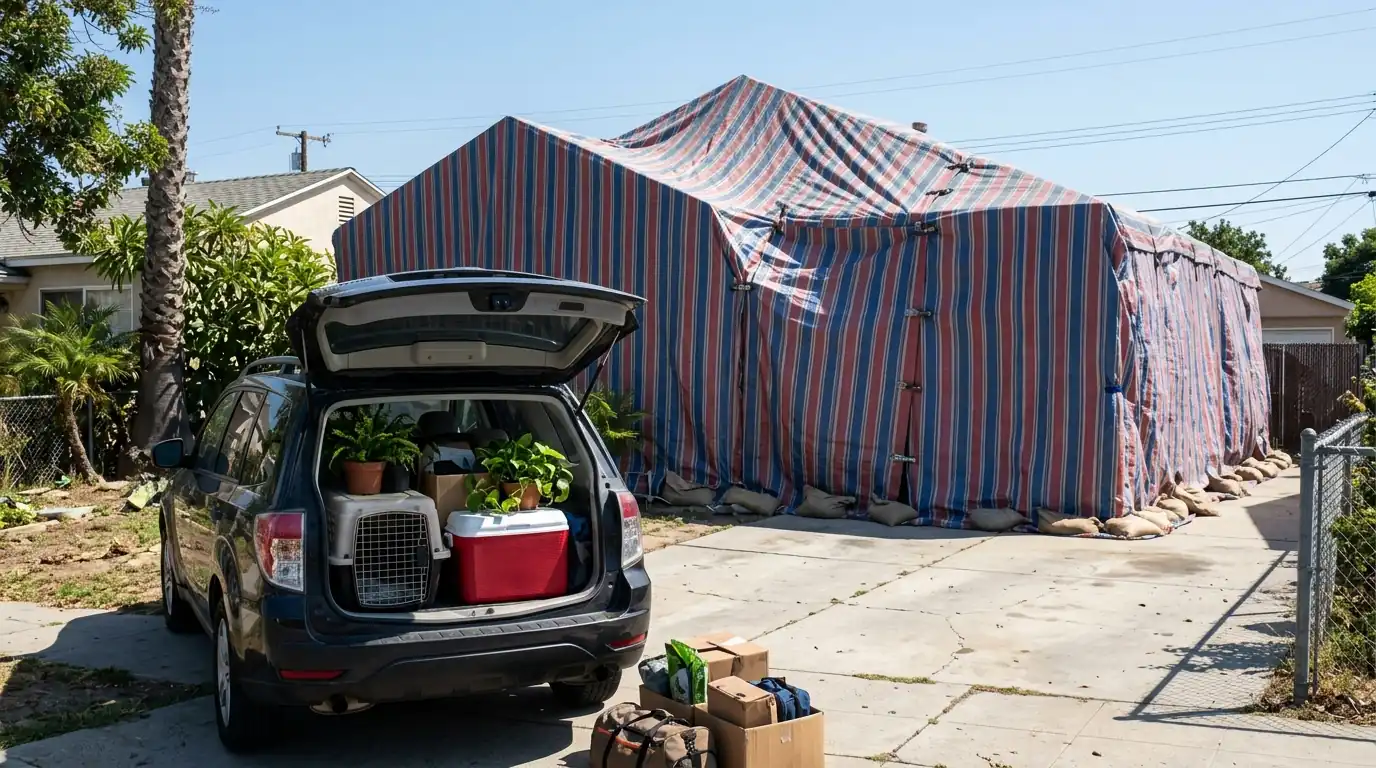
- Why every person, pet and plant has to leave
- Food, medicine and anything you swallow
- Plants indoors, on the patio and against the walls
- Aquariums, wine, mattresses and other special cases
- How clearance testing decides when you can go home
- Residue, lingering smells and what to do on re-entry day
Most people who call us about tenting ask the same question before they ask about price: what happens to the dog, the fish tank, the lemon tree by the kitchen window and the open box of cereal? It is a fair question. Structural fumigation uses a gas that is lethal to anything that breathes, which is exactly why it works on drywood termites hidden deep inside attic framing and window trim.
The short version is that the process is built around keeping living things and food away from the gas while it is in the house, and then proving the air is clear before anyone goes back in. Risk comes from skipped steps, not from the house itself once it has cleared. Below we explain what the fumigant does, what it does not do, and where the real care points are for a typical Long Beach household.
Key takeaways
- The fumigant is lethal to anything that breathes, so every person, pet, fish and houseplant leaves.
- Food and medicine go into proper fumigation bags or out of the house; factory-sealed items can usually stay.
- Trim plants back from the walls, move pots out and water the soil the day before.
- The gas leaves no residue on surfaces and gives no lasting protection once it aerates out.
- Re-entry is decided by a clearance test of the air, not by a set number of hours.
What the fumigant actually does inside the tarps
The gas used for tenting homes in California is sulfuryl fluoride, sold under names such as Vikane. It is released inside the sealed tarps as a gas, spreads through every room, wall cavity and attic bay, and moves into the wood itself. Termites inside the boards breathe it in and die. It does not need to touch a termite gallery directly the way a liquid does, which is the whole advantage over drilling a few spots.
Sulfuryl fluoride has no smell, so a small amount of a warning agent called chloropicrin is released first. Chloropicrin irritates the eyes and nose quickly, which is a deliberate signal that something is wrong if anyone tries to enter.
What the gas does not do matters just as much. It does not soak into fabrics, carpet or furniture in a way that needs washing later. It does not leave a coating on dishes, counters or toys. And it does not stay behind as protection: once it has aerated out of the house, it is gone, which is good for your family and also means new termites can arrive later.
Why every person, pet and plant has to leave
The fumigant kills by interfering with how living cells use energy, and that effect is not limited to insects. Dogs, cats, birds, rabbits, reptiles, fish and houseplants are all vulnerable at the concentrations used under a tent. There is no safe room, safe closet or safe crate inside the tarps, and no amount of covering an animal makes it acceptable to leave it.
People sometimes forget animals that live quietly: a tortoise in a backyard enclosure against the house, a hamster in a child's room, a snake in a heated tank, chickens in a coop built off the garage wall. If an enclosure is attached to the structure or sits within the tarped area, it has to move. Outdoor pets should also be kept away from the tent perimeter, since dogs like to dig at the edges where the tarp meets the ground.
Food, medicine and anything you swallow
Food is not in danger of becoming poisonous in a dramatic way, but sulfuryl fluoride can react with some foods and leave fluoride residues that should not be eaten. The label rules are straightforward: anything you eat, drink or swallow must either leave the house or go into special fumigation bags, usually Nylofume bags, which the fumigant does not pass through. Items in unopened factory-sealed glass, metal or plastic containers can generally stay.
The bags only work when they are closed the right way, which is why we hand out instructions with them. The common mistakes are leaving a bag loosely folded, using an ordinary trash bag or zip bag instead, and missing items stored outside the kitchen.
- Open food in the refrigerator and freezer, even with the doors closed
- Prescriptions, vitamins and supplements in bathrooms, bedrooms and handbags
- Pet food, treats, bird seed and fish flakes
- Baby formula, bottles, teething items and pacifiers
- Mouthwash, toothpaste and cough drops, which count as swallowed items
Plants indoors, on the patio and against the walls
Indoor plants must leave the house. The gas will kill them, and soil in a pot does not protect the roots. Plants on a covered patio, a sunroom or an enclosed porch that sits inside the tarps go too.
Outdoor plants growing right beside the house are a different question. The gas is held inside the tarps, but leaves pressed against the walls can be damaged by direct contact with the gas near the seal, by the weight of the tarps and by heat building up under them on a sunny Long Beach afternoon. That is why the prep sheet asks you to trim shrubs and vines back from the walls, move potted plants a few feet out and water the soil well the day before. Moist soil slows any gas from moving down through it and helps the tarp seal against the ground.
Plants a few feet out from the foundation, lawns and street trees are rarely affected. Bougainvillea, ivy and climbing roses grown into the eaves are the ones most likely to show some leaf burn, and they usually recover with pruning.
Aquariums, wine, mattresses and other special cases
Fish tanks surprise people. A sealed lid does not help, because the air pump pulls room air into the water, and the water itself absorbs the gas. Fish, shrimp and aquarium plants need to come out with the tank equipment, or go to a fish store or a friend for a few days. Large reef tanks take planning, so mention them early.
A wine collection in sealed bottles is usually fine to leave. Opened bottles, spirits with a cork that has been pulled and anything in a decanter should be bagged or removed. Mattresses and pillows sealed in waterproof plastic covers need those covers removed or opened so the gas can move in and back out evenly; ordinary fabric covers can stay. Medical devices that hold medicine, such as inhalers and insulin pens, leave with you.
How clearance testing decides when you can go home
After the exposure period, typically about a day, the operator opens the tarps and the house aerates. Nobody may enter during this time, including the owner, and secondary locks on the doors make sure of it. When aeration is done, the operator goes in with a clearance device and tests the air in the living areas, checking that the fumigant has dropped to the very low level set by the label.
Only when the readings pass does the operator remove the secondary locks and post a notice that the house is cleared for re-entry. If a room or an attic space reads high, aeration continues until it passes. Tent-down to re-entry is usually two to three days, but the test decides, not the calendar.
That clearance reading is the real answer to the safety question. Instead of relying on a waiting period and hope, the air in your house is measured before your family walks back in.
Residue, lingering smells and what to do on re-entry day
Because the fumigant leaves as a gas, there is no residue to wipe off counters or wash out of bedding. Many families open the windows for an hour on the first day, which is about comfort and fresh air rather than a required step. A faint odor near the house can come from the chloropicrin or simply from a house that has been shut up for days.
On re-entry day, take the food out of the bags and check the seals as you go. Bring plants back after you have walked through the house. Ask the gas utility to relight pilots if that was not already arranged. If someone in the household is pregnant, very young, elderly or has a respiratory condition and you have specific health concerns, speak with your doctor ahead of time; the clearance standard is the same for everyone, and your doctor can advise on any extra steps for your family. If anything about the process worries you, a person answers at (562) 636-0445 at any hour.
Reader questions
Can my cat stay in the garage if the garage is not being tented?
Only if the garage is fully detached and is not covered by the tarps, and even then we suggest keeping pets well away from the tent for the whole period. An attached garage is part of the structure and gets fumigated with the house, so no animal can stay there. Most families take pets with them or use a boarder for the two or three nights.
Is it safe to eat the fruit from trees in my yard after the house is tented?
Fruit trees standing out in the yard, away from the walls, are outside the tarps and are not part of the fumigated space. A tree with branches pressed against the house may get some leaf damage near the tarp, and we suggest not eating fruit that was caught under the tarp itself. Pick ripe fruit before the job if a tree grows right against the walls.
Does the fumigant get into the soil and harm the vegetable garden next to the house?
Sulfuryl fluoride is a heavy gas held inside the tarps, and well-watered soil slows any movement down into the ground. Beds right along the foundation are the area to think about. Watering deeply the day before, moving pots away and harvesting anything ready to eat from a bed under the tarp edge keeps the risk low. Beds farther out in the yard are not part of the treated space.
Written by Celeste Goodwin, Termite Guides Editor at Exquisite Termite Control.