In this guide
Once an inspection confirms drywood termites, the next question is almost always the same: do we have to tent the house, or can it be treated locally? Both are legitimate tools, and neither is right for every home. The honest answer depends on how many colonies there are, where they are, and how much of the wood can actually be reached.
This guide compares the main drywood options side by side, then walks through the questions we use to decide between them on Long Beach homes, from small bungalows to post-and-beam ranches and condo buildings.
Key takeaways
- Fumigation reaches every board, including hidden colonies, but needs two to three nights away and has no residual.
- Local treatment works well for a few reachable colonies and lets you stay home, but cannot treat colonies nobody has found.
- The number of active areas and how much wood is accessible drive the decision.
- Heat is a no-gas whole-structure option with its own limits; orange oil is a local tool.
- In condo and attached buildings, whole-structure work is usually an HOA decision.
The options at a glance
There are two broad families of drywood treatment. Whole-structure treatments reach every board in the house at once. Localized treatments go after specific colonies that have been found.
- Whole-structure fumigation: the house is covered in tarps and filled with sulfuryl fluoride gas; reaches every piece of wood, needs two to three nights away, no residual effect
- Whole-structure heat: the house is heated until wood cores reach lethal temperature; no gas, but heat-sensitive items must come out and dense or shaded framing can stay cooler
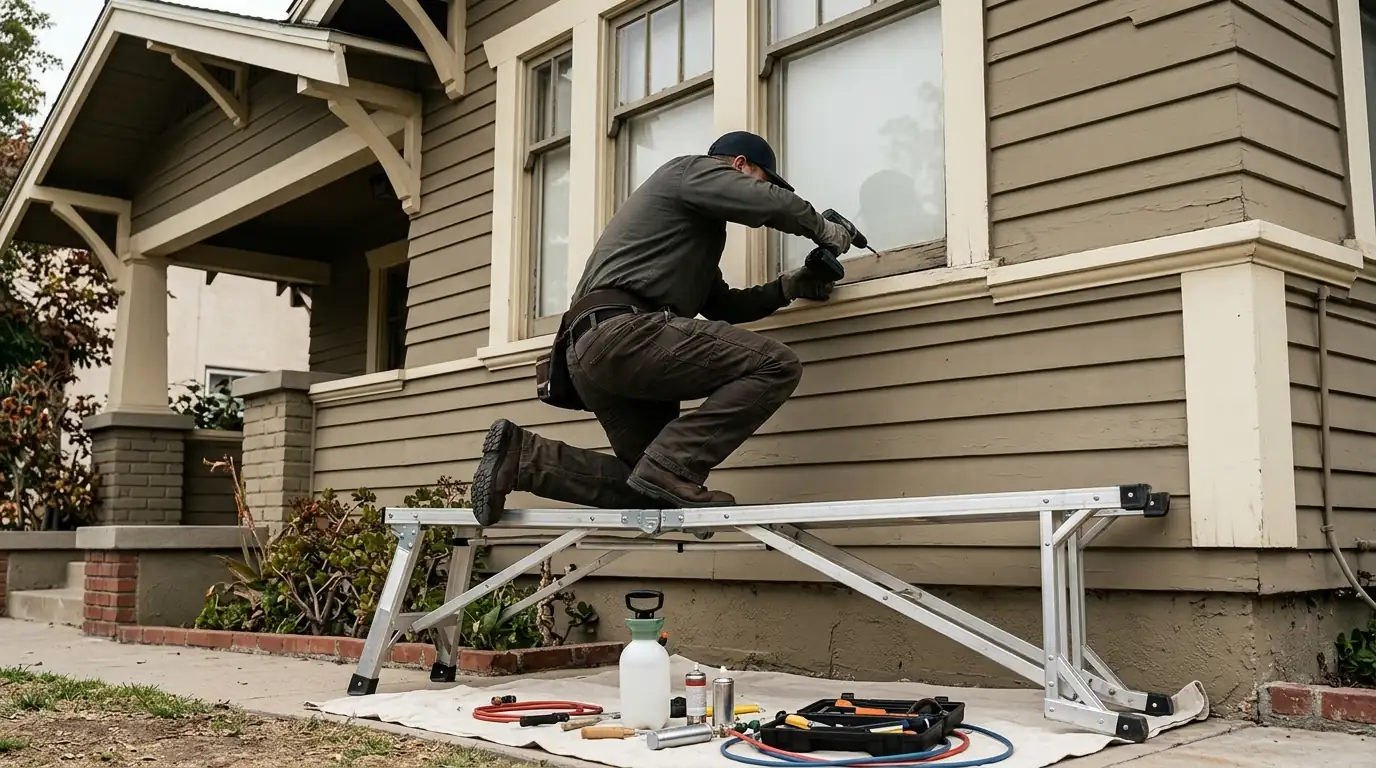
- Drill and inject: small holes are drilled into the galleries and a termiticide or orange oil is injected, then patched; you stay home
- Foam and dust products: pushed into voids and galleries where liquid will not spread well
- Wood replacement: badly damaged trim, fascia or rafter tails are cut out and replaced, often combined with a local treatment
- Borate on bare wood: protects unpainted framing against new colonies, but cannot reach colonies inside painted or enclosed wood
How whole-structure fumigation compares
Fumigation is the only method that reaches every board in a house regardless of whether anyone can see it: inside wall cavities, under floors, deep in attic framing, inside built-in cabinets and furniture. That is its main advantage. When colonies are widespread or hidden, it removes the guesswork about whether one was missed.
The trade-offs are practical. You leave for about two to three nights, bag or remove food and medicine, take plants and pets out, and arrange for the gas to be shut off and relit. Fumigation also leaves no residual protection, so new swarmers can still land later. On a detached house with drywood activity in several rooms, it is usually the most complete choice.
How local treatment compares
Local treatment works when colonies are limited and reachable. If the inspector finds one active colony in a window frame and one in a section of fascia, drilling and injecting those areas can kill the colonies without moving out. Orange oil, a d-limonene product, and other labeled termiticides kill the termites they contact, and they can leave some residual effect in the treated area.
The risk is the colony nobody found. A local treatment only treats what was identified. If another colony is sealed inside a wall or deep in an attic beam with no kick-out hole yet, it keeps growing and shows up later. That is why a local plan depends on a thorough inspection and why follow-up checks matter.
Five questions that decide between them
When we write up a drywood plan, these are the questions that steer the recommendation. None of them alone decides it; the pattern across all five does.
- How many separate areas show activity? One or two spots favor local; activity in several rooms or levels favors whole-structure
- Can we reach the wood? Open attics, garages and exterior trim are reachable; finished walls, enclosed soffits and sealed ceilings often are not
- Is the activity in framing or trim? Trim and fascia are good local targets; activity deep in rafters, ridge beams or wall plates raises the risk of missed colonies
- Is it a shared or attached building? Condo and townhome buildings often need an HOA decision on tenting the whole structure
- Are there heat-sensitive or hard-to-move items? This affects whether heat is practical as a whole-structure alternative
How Long Beach housing types tend to sort out
Craftsman bungalows in California Heights, Rose Park and Belmont Heights often have open attics and exposed rafter tails, which makes it easier to find and inject colonies. But the same homes have had a century of swarmer landings, and finding activity in three or four areas is common. Many of them end up tented.
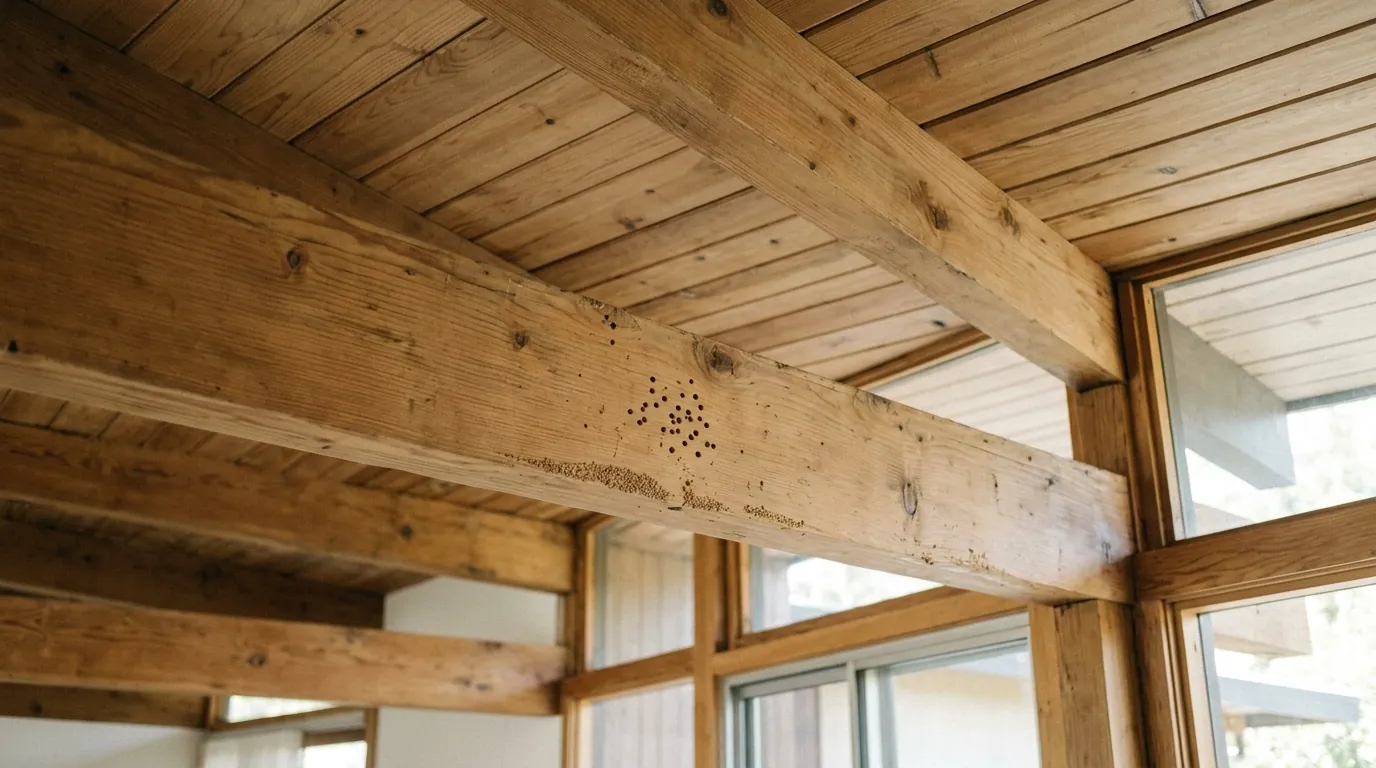
Spanish Colonial Revival homes in Bixby Knolls and Bluff Park have plaster walls and tight attics, which hide colonies well. Cliff May Ranchos in the Plaza have exposed post-and-beam ceilings with tongue-and-groove decking; activity in the beams can be treated locally when it is visible, but the decking above is hard to inspect from below.
Downtown condo buildings and Alamitos Beach courtyard apartments add an ownership question. A single unit owner can usually have trim, cabinets or a balcony treated locally, while fumigation of the whole building is typically an HOA decision that has to be scheduled for every unit at once.
Where heat and orange oil fit in
Whole-structure heat is a middle path that some homeowners prefer because no gas is used and the treatment is usually done in a day. The structure is heated until the core of the wood reaches about 120 degrees F and holds there. The limits are that heat-sensitive items such as candles, some electronics, vinyl and plants must come out, and dense or well-insulated framing can stay cooler than the target. Like fumigation, heat leaves no residual protection.
Orange oil is a local treatment, not a whole-house one. It is a good choice for colonies in reachable trim, doors and framing, and it is popular with homeowners who prefer to stay in the house. It is not a substitute for fumigation when activity is widespread or hidden.
What to ask before you decide
Ask the inspector to show you on the report or on a sketch where every finding is. Ask which areas were inaccessible and therefore not inspected, because those are the places a local plan cannot cover. If local treatment is offered, ask what follow-up is included and when. If fumigation is recommended, ask why local treatment would leave risk in this particular house.
A good recommendation should make sense to you in plain terms. If you want to talk through a report you already have, a person answers at (562) 636-0445 at any hour.
Reader questions
If I choose a local treatment now, can I still tent later if more termites show up?
Yes. Many homeowners start with a local treatment for a small, clearly located problem and keep an eye out for new pellets. If activity appears in new areas over the next season or two, fumigation remains an option. The important part is keeping the inspection report, noting the dates of any new findings, and having those areas checked rather than spot treating each one as it appears.
Is tenting overkill for a small house with termites in only a few places?
It can be, if the few places are confirmed, reachable and the rest of the house inspects clean. In that case a local plan is reasonable. Tenting makes more sense when those few places are in framing that suggests more colonies nearby, when parts of the house could not be inspected, or when activity keeps turning up year after year in different rooms.
Does a local termite treatment cover the whole house for a while afterward?
No. A local treatment covers the wood that was treated. Orange oil and some other termiticides can leave residual effect in that area, but the rest of the house is untreated. Borate can protect bare, unpainted framing in an attic or crawlspace against new colonies, which is why it is sometimes added to a local plan for exposed wood.
Written by Celeste Goodwin, Termite Guides Editor at Exquisite Termite Control.