In this guide
For a long time, mosquitoes in Long Beach were mostly an evening nuisance near the river channels, the wetlands and Colorado Lagoon. That has changed. Invasive Aedes mosquitoes, small, black with white stripes and aggressive, now bite in broad daylight in backyards across Southern California, often around the ankles and under patio tables.
These mosquitoes do not need a pond or a marsh. They breed in tiny amounts of water in the yard itself, which means the most effective control starts with you. This guide explains how they live, then gives a practical weekly checklist and the steps we add when a yard needs treatment.
Key takeaways
- Small black and white mosquitoes biting during the day are invasive Aedes.
- They breed in tiny amounts of water close to where they bite.
- Their eggs survive dry for months, so scrub or flip containers every week.
- Check hidden spots like yard drains, downspouts, bromeliads and pot-in-pot planters.
- Larvicide for water you cannot remove and targeted treatment of resting sites reduce biting.
How to recognize invasive Aedes
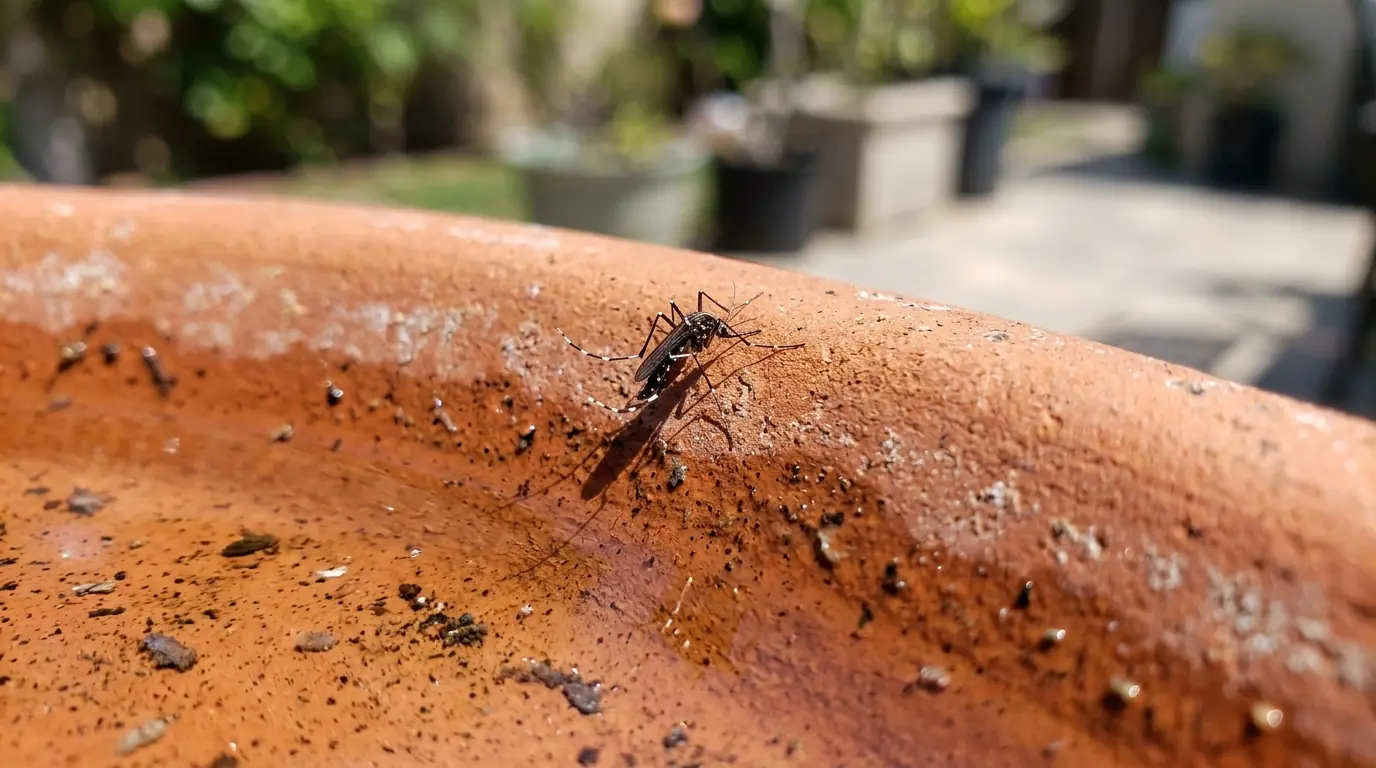
The two invasive species found in Southern California are the yellow fever mosquito, Aedes aegypti, and the Asian tiger mosquito, Aedes albopictus. Both are small and dark with bright white markings on the legs and body. Aedes aegypti has a lyre-shaped white pattern on its back; the Asian tiger mosquito has a single white stripe down the middle.
Behavior is the giveaway. They bite during the day, especially in the morning and late afternoon, they stay low, and they are persistent, often biting several times. They rarely fly far from where they hatched, usually staying within a few hundred feet. If you are getting bitten in the yard at lunchtime, the source is almost always close by: your yard or a neighbor's.
Why they are so hard to get rid of
Aedes lay their eggs just above the waterline on the inside of containers. The eggs stick to the wall and can survive dry for months. When water rises from rain, irrigation or a hose, they hatch. In warm weather the cycle from egg to biting adult can take about a week.
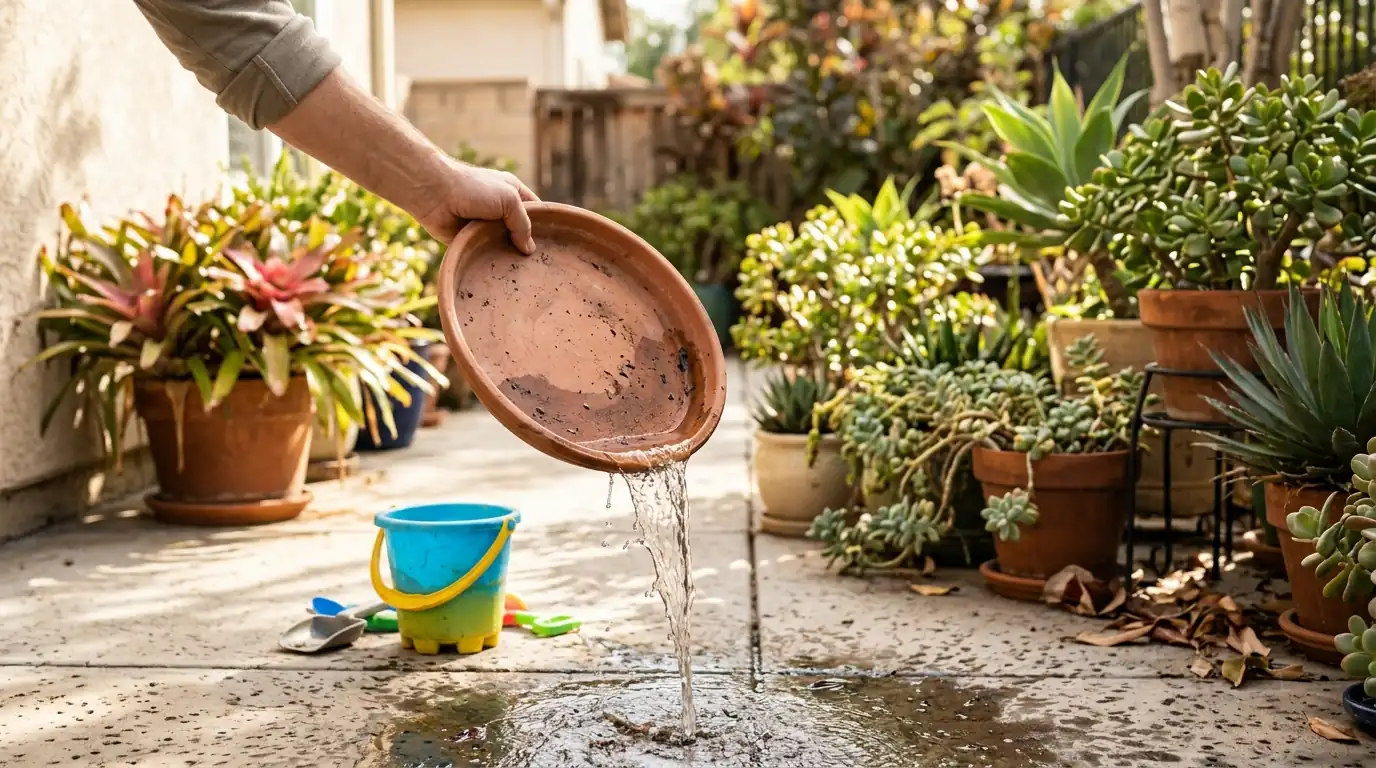
Because the eggs survive drying, simply dumping a container once does not finish the job. Eggs left on the walls of a saucer or a bucket hatch the next time it fills. That is why scrubbing or turning containers over matters, and why weekly checks work far better than an occasional cleanup.
Your weekly backyard checklist
Walk the yard once a week, ideally on the same day, and deal with anything that holds water. A bottle cap of water is enough for Aedes larvae.
- Empty and scrub plant saucers, or fill them with sand
- Tip and store buckets, watering cans, toys, wheelbarrows and tarps
- Change bird bath and pet water bowls every few days and wipe the inside
- Check bromeliads, agave and other plants that hold water in their leaves
- Clear clogged rain gutters and downspout extensions
- Look under patio furniture, grills, covers and air conditioner drip spots
- Drill drain holes in recycling bins and trash can lids that collect water
Hidden breeding spots we find in Long Beach yards
The obvious containers are only part of it. On inspections we regularly find larvae in places homeowners never think to check. Sump boxes for irrigation valves, French drain catch basins and yard drains hold water for weeks. Corrugated downspout extensions trap water in their folds. Tarps and pool covers form small puddles. Pot-in-pot planters hide water between the two layers.
In older neighborhoods with mature landscaping, like Bixby Knolls, Los Cerritos and California Heights, bromeliads and decorative containers are common sources. In Naples and Belmont Shore, boat covers, dock gear and small backyard fountains matter. In apartment and condo courtyards downtown and in Alamitos Beach, shared planters, drains and pot saucers on balconies can keep a whole building supplied.
Neighbors matter too. Since these mosquitoes stay close to home, a single neglected yard can keep a block busy. Sharing the checklist across a fence helps everyone.
What we do when a yard needs treatment
When source reduction alone is not keeping up, we add treatment in a set order. First is an inspection of the yard to find and remove breeding sources, including the hidden ones above. Water that cannot be removed, like a yard drain or a decorative feature, can be treated with a larvicide such as Bti, a naturally occurring bacterium that targets mosquito larvae.
For adults, a targeted application to the shady resting places where Aedes wait during the heat of the day, under decks, in dense shrubs, behind fences and along the shaded side of the house, reduces biting. Treatments are repeated on a schedule through the warm season because new mosquitoes keep hatching from eggs and drifting in from nearby yards.
Treatment works best combined with the weekly checklist. Neither one alone does as well.
Personal protection while you work on the yard
While the yard is being brought under control, protect yourself during the day as well as in the evening. Use an EPA-registered repellent with ingredients such as DEET, picaridin or oil of lemon eucalyptus, following the label, especially on the ankles and lower legs. Light-colored long pants help.
A fan on the patio is surprisingly effective because Aedes are weak fliers. Keep window and door screens in good repair, and do not prop doors open to the yard on calm, warm days.
Indoors, Aedes aegypti in particular will follow people inside and rest in dark corners, under beds and behind curtains. If you are being bitten in the house during the day, check for a torn screen, a gap under a door to the yard, or a saucer, vase or pet bowl indoors that has been holding water for more than a few days.
The role of Long Beach Vector Control
Long Beach runs its own Vector Control Program in the city health department, separate from the county districts that serve most nearby cities. The program monitors mosquitoes, responds to resident reports of daytime biting, inspects neglected swimming pools and works on public sources such as storm drains, channels and wetlands.
Reporting day-biting mosquitoes to the program helps track where invasive Aedes are spreading. Private yards are still the owner's responsibility, which is where a combination of the checklist and, when needed, a treatment plan comes in. If you want help with your own yard, a person answers at (562) 636-0445 at any hour.
Reader questions
Why are mosquitoes biting me in the afternoon when they used to come out only at dusk?
The native mosquitoes that most people grew up with in Southern California are mostly active at dusk and at night. Invasive Aedes species bite in the daytime, especially in the morning and late afternoon, and they now live in many Long Beach neighborhoods. Daytime biting is one of the clearest signs that Aedes are breeding nearby.
Do citronella candles and bug zappers help against day-biting mosquitoes?
Not much. Citronella candles give limited protection in a small area and only while the air is still. Bug zappers mostly kill moths and beetles, and Aedes are not strongly drawn to their light, especially in daylight. Removing standing water, using a registered repellent on your skin and running a fan on the patio do far more.
Will mosquito treatment hurt the bees and butterflies in my garden?
Careful timing and placement reduce the risk. Larvicides like Bti target mosquito larvae in water and do not affect bees. For adult treatment, we focus on shady resting areas rather than flowering plants and avoid applying to blooms where pollinators are feeding. Let us know about vegetable beds, fish ponds or beehives nearby so the plan can work around them.
Written by Celeste Goodwin, Termite Guides Editor at Exquisite Termite Control.