In this guide
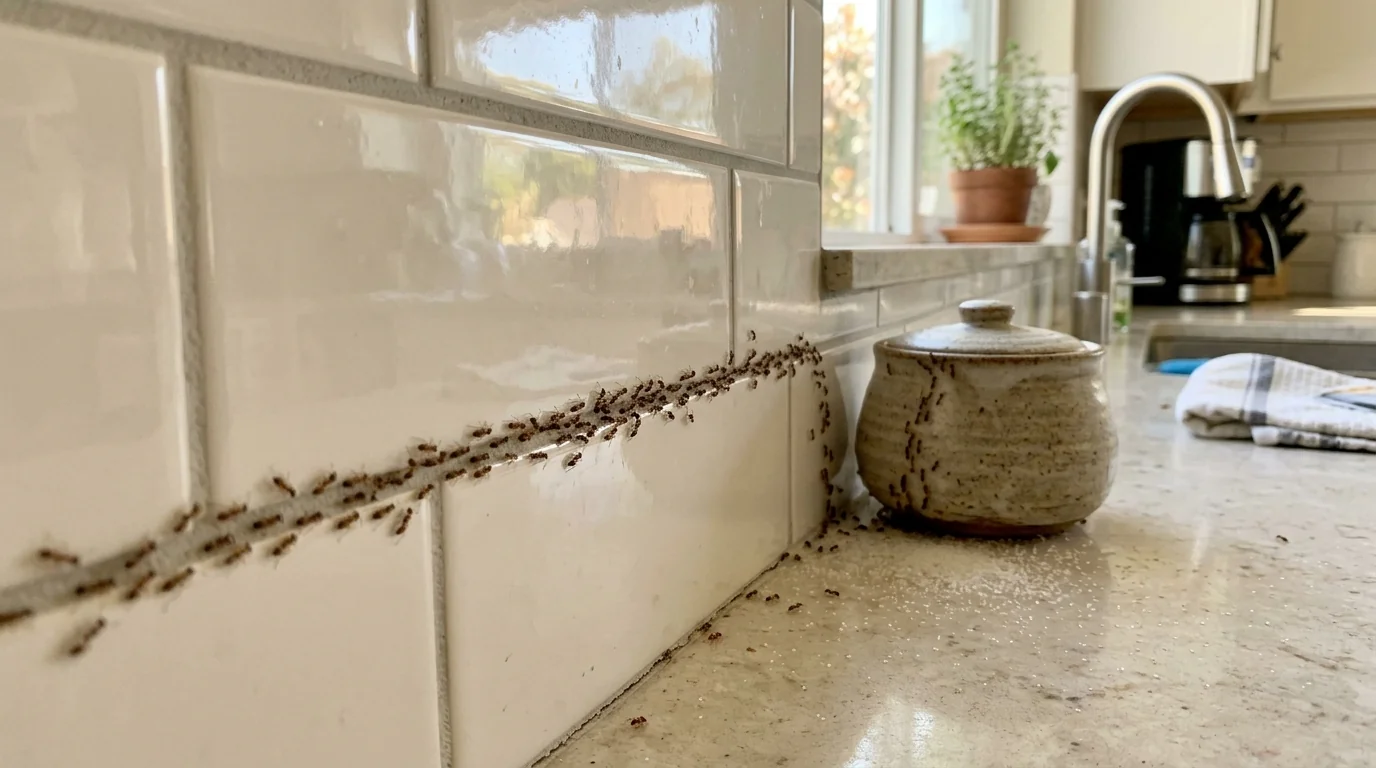
Few pests frustrate Long Beach homeowners as much as Argentine ants. You wipe up a trail along the counter, spray the corner, and two days later they are back, sometimes in a different room. The reason is not that you missed a few. Argentine ants live in enormous, connected colonies spread across whole blocks, and the ants in your kitchen are a tiny fraction of the population outside.
This guide looks at the ant from the colony's point of view: why it comes inside, why common fixes backfire, and what a workable plan looks like through the seasons.
Key takeaways
- Argentine ants form multi-queen supercolonies, so the ants inside are a small part of the population.
- Heat waves and heavy rain both drive them indoors in Long Beach.
- Repellent sprays reroute trails and can split nests.
- Slow-acting baits and non-repellent treatments outside reduce the colony.
- Controlling aphids, sealing food and fixing leaks keeps them from coming back.
What makes Argentine ants different from other ants
Argentine ants are small, about an eighth of an inch, uniform light to dark brown, and they move in fast, steady lines. They were introduced to California more than a century ago and now dominate much of coastal Southern California, pushing out native ant species.
The key difference is how their colonies work. Most ant species have one queen and defend their territory against neighboring colonies. Argentine ants have many queens per nest and form supercolonies, where nests across a large area cooperate rather than fight. Workers and queens move between nests freely. Kill one nest and others nearby simply fill the gap.
They also split and relocate quickly. A nest under a patio paver can move into a potted plant, a wall void or a planter in a matter of days.
Why they come inside when they do
In Long Beach, kitchen invasions follow the weather. Hot, dry spells in late summer and early fall dry out the soil and the plants that support the honeydew-producing insects they feed on, so ants come indoors looking for water and sugar. Heavy winter rain floods nests and pushes ants up and inside to stay dry. Both extremes send trails into kitchens, bathrooms and laundry rooms.
Inside, they want moisture and sweets: a sticky juice ring, pet food, a fruit bowl, a drip under the sink or a damp sponge. Once a scout finds it, a chemical trail forms and thousands of workers follow within hours.
Why the spray bottle makes it worse
Most household ant sprays are repellent contact insecticides. They kill the ants you see and leave a barrier that ants avoid. Because the colony is huge and has many queens, killing a few hundred workers does not dent it. The repellent residue just reroutes the trail to a new entry point, which is why ants often reappear in a different cabinet or room after a spray.
Repellent sprays can also cause what is called budding, where a stressed nest splits into several smaller ones. Spraying perimeter barriers around the outside of a house can do the same thing on a bigger scale, and it rarely lasts against a supercolony.
- Wiping a trail with soapy water removes the scent and is fine for cleanup
- Spraying repellent around baseboards tends to move the trail, not stop it
- Boiling water on a nest kills part of it and the rest relocates
- Over-the-counter baits can help if they are not mixed with sprays
What actually reduces the colony
The approach that works best is to feed the colony a slow-acting bait that workers carry back to nests, while removing the reasons the ants come inside. Argentine ants prefer sweet liquid baits most of the year, so baits placed along active trails outdoors, near the nests and the entry points, are often more effective than baits on the kitchen counter.
Where an exterior treatment is needed, non-repellent products applied to the foundation, entry points and nest sites let ants pass through and carry the material back without detecting it. The goal is to lower the population around the house, not to build a wall that pushes them elsewhere.
Results take days to a couple of weeks, not hours. In the first few days you may see more ants at the bait, which is the bait working.
The house and yard fixes that make the difference
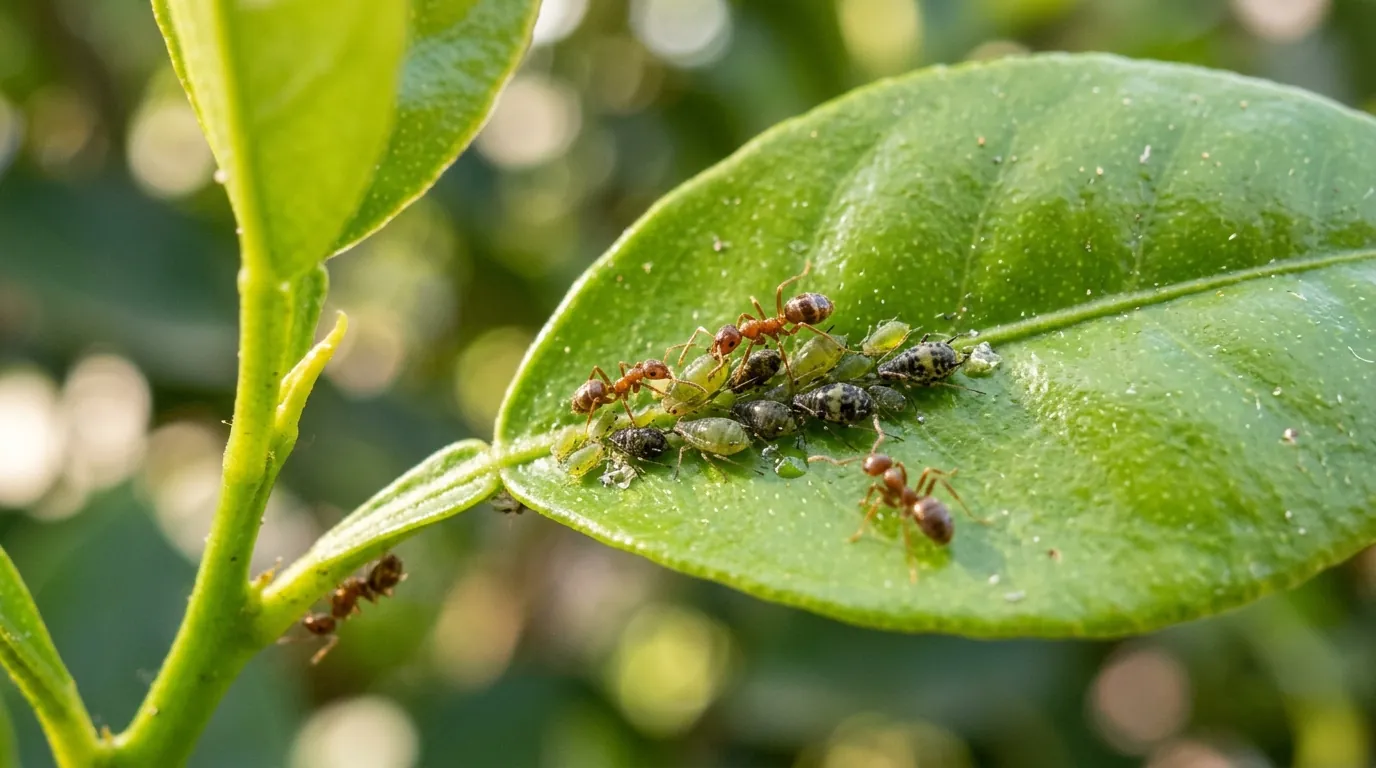
Treatment works much better when the property stops supporting large numbers of ants. Argentine ants farm aphids, scale and whiteflies for honeydew, so trees and shrubs covered in those insects are ant feeding stations. Citrus, roses and hibiscus are common in Long Beach yards and often host them.
- Trim branches and shrubs so they do not touch the house walls or roof
- Control aphids and scale on citrus, roses and hibiscus
- Pull mulch and soil back a few inches from the foundation
- Fix leaky hose bibs, irrigation drips and sink leaks
- Store sugar, honey, cereal and pet food in sealed containers
- Seal gaps where pipes and wires enter the walls
Season by season in Long Beach
Winter: ants push in during heavy rain, especially in slab homes in Los Altos and El Dorado Park Estates and ground-floor units in Alamitos Beach. Keep baits outside near the entry points and dry up indoor moisture.
Spring: colonies grow fast as plants flush and aphids return. This is a good time to start outdoor baiting and fix the yard conditions above before summer.
Summer and early fall: the main kitchen season in most neighborhoods, from Bixby Knolls bungalows to Belmont Shore cottages, as heat dries out the yard. Keep water sources outside and sugary food sealed inside.
Late fall: activity usually drops as the heat breaks, which is a good time to seal gaps and trim plants back before the winter rains.
When to call for help
If ants are in more than one room, return within days of cleanup, or show up in electrical outlets, walls or the dishwasher, the colony is well established around the house and a structured plan saves time. Apartment and condo buildings are a special case: ants travel through shared walls and plumbing, so treating one unit alone often moves them next door.
A person answers at (562) 636-0445 around the clock if you want to talk through what you are seeing. Have a sense of which rooms, which times of day and whether the trails come from a window, a floor gap or the plumbing.
Reader questions
Why do ants show up in my dishwasher and coffee maker when the counters are clean?
Argentine ants are after moisture as much as sugar. Dishwashers, coffee makers and the cabinet under the sink stay damp and often hold traces of food or sugar. Trails can come up through plumbing gaps or the back of the cabinet. Running the dishwasher, drying the coffee maker and sealing pipe gaps under the sink cuts down the attraction.
Do natural remedies like vinegar, cinnamon or peppermint oil keep Argentine ants out?
They can disrupt a trail for a short time because they mask the scent ants follow, which makes them useful for cleanup. They do nothing to the colony, though, and ants quickly find another route. For a lasting change, focus on removing food and water sources, sealing entry points and reducing the colony outside with baits.
Can my next door neighbor's yard be the source of my ant problem?
Very often, yes. Argentine ant supercolonies span property lines, and nests in a neighbor's planters, lawn or trees are part of the same population. That is why outdoor baiting along your perimeter and fence lines matters. In duplexes, townhomes and apartment buildings, coordinating treatment across units gives far better results.
Written by Celeste Goodwin, Termite Guides Editor at Exquisite Termite Control.