In this guide
- Step 1, one to two weeks out: book the gas shutoff and plan where to stay
- Step 2, the week before: bag or remove food, medicine and pet food
- Step 3, two or three days before: plants, soil and the outside walls
- Step 4, the day before: open up the inside of the house
- Step 5, the morning of: keys, locks and the last walk-through
- Step 6, under the tent and aeration
- Step 7, re-entry day: clearance and getting settled
Tenting a house for drywood termites is a big event in a homeowner's week, but most of the work on your side is simple and predictable. The fumigant used for structural fumigation, sulfuryl fluoride, is a gas that reaches every board under the tarps. Good preparation protects your food, plants and pets, keeps the job on schedule and lets you move back in without surprises.
Below is the order we suggest for a typical Long Beach home, from a week out to the morning you return. Your prep sheet for your specific house always comes first, since apartments, homes with gas fireplaces and houses with fish tanks or wine collections each have their own details.
Key takeaways
- Book the gas shutoff and relight early, and plan for two to three nights away.
- Remove or bag every food, drink, medicine and pet food item that is not factory sealed.
- Trim plants back from the walls and water the soil around the house the day before.
- Open interior doors, drawers and cabinets so the gas can move freely.
- Re-entry only happens after the air is tested and cleared; fumigation has no residual effect.
Step 1, one to two weeks out: book the gas shutoff and plan where to stay
Most fumigations in the area need the natural gas turned off to the house, because the tarps and the gas can extinguish pilot lights and the fumigant should not pass through burning appliances. In Long Beach, gas service to most homes is provided by the city's own utility, and some neighboring areas are served by SoCalGas. We tell you which applies and the timing to request, and arrange for it on many jobs, but confirm who is responsible for booking the shutoff and the relight.
Plan to be out of the house for about two to three nights. Pets go with you or to a boarder. Fish tanks usually need to come out too, along with the fish, because the aerator pulls air from the room. Book the stay early in late summer and fall, when many homes in the same neighborhood tent around the same time.
Step 2, the week before: bag or remove food, medicine and pet food
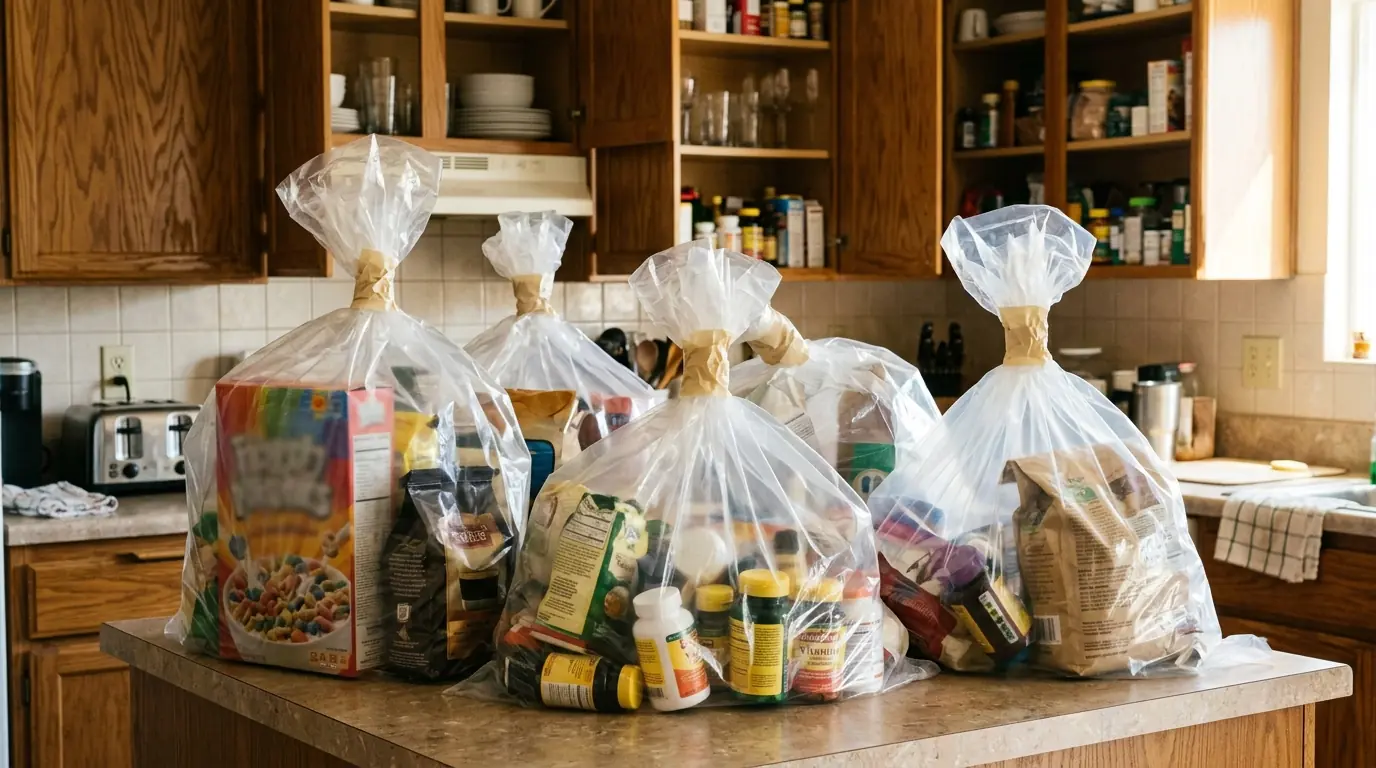
Anything you eat, drink or swallow that is not in a factory-sealed glass, metal or unopened plastic container needs to be removed from the house or sealed in the special fumigation bags we provide, commonly called Nylofume bags. Each bag is closed according to the instructions, usually by twisting the top, folding it over and taping it.
Go room by room. The kitchen is obvious, but people often miss a drawer of cough drops, a bowl of fruit, vitamins in the bathroom, a jar of dog treats by the door, coffee beans in the garage freezer, or a minibar in a home office. Refrigerators and freezers count: open food inside them has to be bagged or removed even though the door is closed.
When in doubt, take it out. Many homeowners simply load a cooler and a couple of boxes into the car.
- Opened boxes, bags and jars of food, including in the fridge and freezer
- All medicines, vitamins and supplements, including in purses and car bags kept indoors
- Pet food, treats and bird seed
- Tobacco and anything else that is ingested
- Baby formula, bottles and pacifiers
Step 3, two or three days before: plants, soil and the outside walls
Indoor plants need to leave the house, including any hanging on a covered patio that will be inside the tarps. Outside, the fumigation crew needs to seat the tarps against the ground, so trim shrubs, vines and climbing roses back from the walls, and move planters, garden decor and bikes a couple of feet away from the foundation.
Water the soil around the house thoroughly the day before. Moist soil helps protect plant roots near the foundation and holds the tarp seal better. In Long Beach this matters a lot during dry late summer weeks, when foundation beds can be dusty and loose. If you have a bougainvillea or ivy grown into the eaves, tell us before the day; it may need to be cut back further so the tarp does not crush it or leave a gap.
Step 4, the day before: open up the inside of the house
The gas has to move freely through every room, cabinet and closet. Open interior doors, cabinet doors, closet doors and drawers. Lift the lids of chests, open the doors of armoires and pantry cabinets, and unzip any fitted mattress covers that are completely sealed. Leave attic and crawlspace hatches accessible.
Turn off and unplug anything with a pilot light or a heating element, including space heaters. Switch off the automatic sprinklers near the house so they do not soak the tarps. Raise blinds and open curtains so the crew can see in. If you have a security system, make sure it is off or that the crew has the code, and tell us about motion lights or cameras on the eaves.
Step 5, the morning of: keys, locks and the last walk-through
Leave keys for every exterior door, including the garage, side gates and any detached shed that will be tented. On the day, the crew installs secondary locks on the doors, which only the fumigation operator can open, and posts warning signs on the structure. Nobody, including the owner, may enter until the house has cleared.
Do a last walk-through: pets, fish, plants and food out; doors and drawers open; windows closed unless told otherwise; cars out of an attached garage. A quick check of the bathroom cabinets catches the medicine that most often gets left behind. If something comes up the morning of, a person answers at (562) 636-0445 at any hour.
Step 6, under the tent and aeration
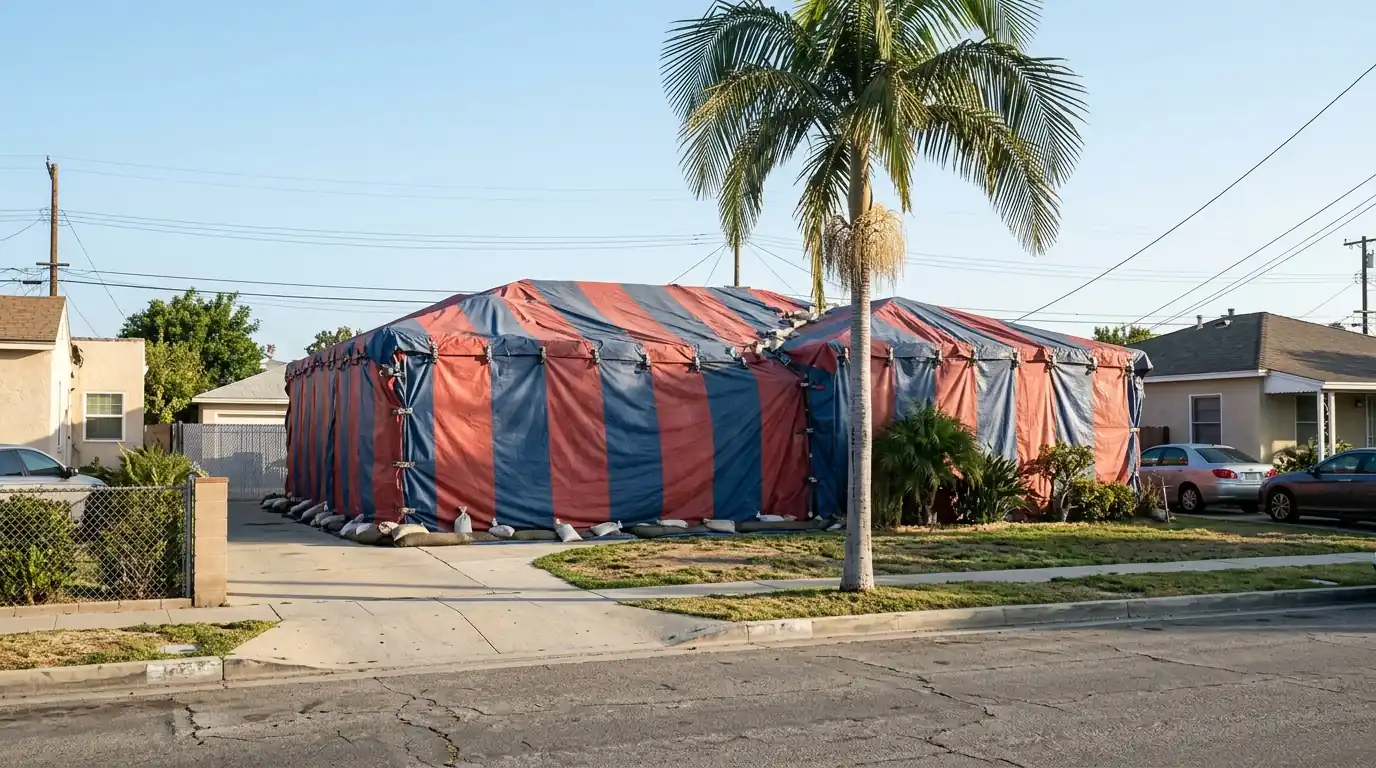
Once the tarps are on and sealed, the fumigant is released inside and held for the exposure period on the label, typically about a day. The operator then opens the tarps and the house aerates. The fumigant leaves no residue on surfaces and does not soak into fabrics in a way that needs cleaning afterward. Total time from tent-down to re-entry is usually two to three days, depending on the size of the structure, the weather and the dose.
During this period do not try to enter for any reason. If you forgot something, call and we will tell you whether it can wait.
Step 7, re-entry day: clearance and getting settled
Before anyone can go back in, the operator tests the air inside the house with a clearance device to confirm the fumigant has dropped to the allowed level, then removes the secondary locks and posts a re-entry notice. Only then can you move back in.
After that, open the windows for a while if you like, unbag your food, bring the plants back, and set up the gas relight if it was not already scheduled. Do not throw away the bag tags or the paperwork; they are part of your record. Expect to see some dead termites or swarmers drop out of wood in the weeks after, which is normal.
One more point that surprises people: fumigation kills the colonies in the house at the time of treatment, but it leaves no residual protection. New swarmers can land later, so a follow-up inspection and attention to exposed wood are worth keeping on the calendar.
Reader questions
Do I need to wash my dishes, clothes and bedding after we come home from tenting?
No. The fumigant is a gas that leaves no residue on surfaces, so dishes, linens, clothes and furniture do not need special cleaning. The things that matter are the items you were asked to bag or remove, mainly food, medicine and pet food. Many families air out the house by opening windows for an hour, which is a matter of comfort rather than safety.
What about the wine, canned goods and sealed bottles in my pantry?
Items in their original factory seal made of glass, metal or unopened plastic are typically fine to leave in place, including canned goods, unopened bottles of wine and sealed jars. Anything with a cork or seal that has been opened, or a box with an inner bag that is open, should be bagged or removed. If you have a large wine collection, mention it during planning.
Will the tarps damage my roof tiles or garden?
Crews take care on clay tile and older roofs, and some tiles can crack, which is why the roof condition is discussed before the job. Plants right against the walls are the most at risk, from the weight of the tarps and the gas. Trimming them back, moving pots away and watering the beds the day before gives them the best chance.
Written by Celeste Goodwin, Termite Guides Editor at Exquisite Termite Control.