In this guide
If you hear scratching or quick footsteps across the ceiling at night in Long Beach, the most likely culprit is a roof rat. These slim, agile climbers live high, travel along fences, utility lines and tree branches, and move into attics when they find a gap. The city's mature Mexican fan palms, queen palms, ivy-covered walls and backyard citrus give them food and cover almost everywhere.
This guide explains why the palm and attic connection is so strong here, how to tell roof rats from other noises, and the order of steps that actually ends an attic problem rather than just thinning it out for a few weeks.
Key takeaways
- Noise overhead at night in Long Beach usually means roof rats.
- Palm skirts, ivy and fruit trees give roof rats food, cover and a route to your roof.
- Trap inside first, then seal, so rats are not trapped in walls.
- Seal with metal mesh, hardware cloth and concrete, not foam alone.
- Trim palms, ivy and tree limbs back from the roof to keep them from returning.
Meet the roof rat
The roof rat, also called the black rat or ship rat, is smaller and slimmer than the Norway rat, with a tail longer than its head and body, large ears and a pointed nose. It is an excellent climber and prefers to nest above ground: in palm skirts, dense ivy, bougainvillea, attic insulation and wall voids.
Norway rats are heavier and burrow at ground level. In Long Beach they are more common near the harbor, alleys, sewers and commercial areas, and they tend to show up under houses, decks and in garages. Both can live on the same property, but if the noise is overhead, think roof rat first.
Why palms, ivy and fruit trees attract them
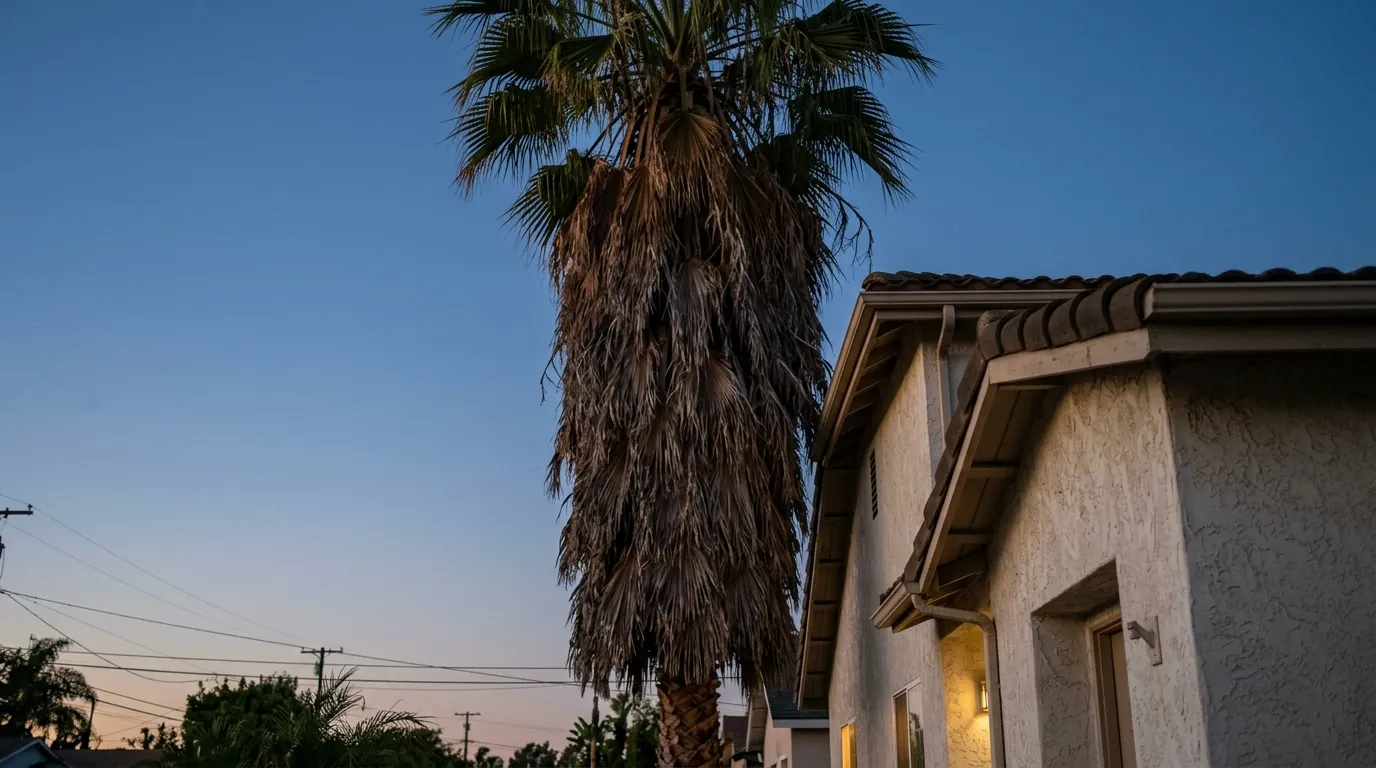
Untrimmed fan palms keep a skirt of dead fronds that makes a dry, sheltered nest high off the ground. Queen palms drop clusters of fruit that roof rats eat. Ivy on walls and fences forms a continuous highway with cover from owls and cats. Backyard oranges, lemons, avocados and loquats provide food for months, and roof rats often hollow out citrus while it is still on the tree, leaving an empty peel behind.
From there, rats follow the easiest route to shelter. A palm frond touching the eave, a power line running to the house, a tree limb over the roof, or a fence that ends at the garage wall is enough. In older neighborhoods like Bixby Knolls, Los Cerritos, California Heights and Bluff Park, where the trees are large and the houses are close together, roof rats move from yard to yard easily.
Signs that they are in the attic, not just the yard
Noise at night is the most common sign, usually starting after dusk and again before dawn. Look for other clues before deciding where they are getting in.
- Droppings about half an inch long with pointed ends, in the attic or garage
- Dark greasy rub marks around openings, pipes and beams
- Trampled tunnels or nests in attic insulation
- Chewed wiring, ducting or stored boxes
- Hollowed citrus or half-eaten avocados in the yard
- Pets staring at the ceiling or a wall at night
Step 1: inspect the whole outside before setting a single trap
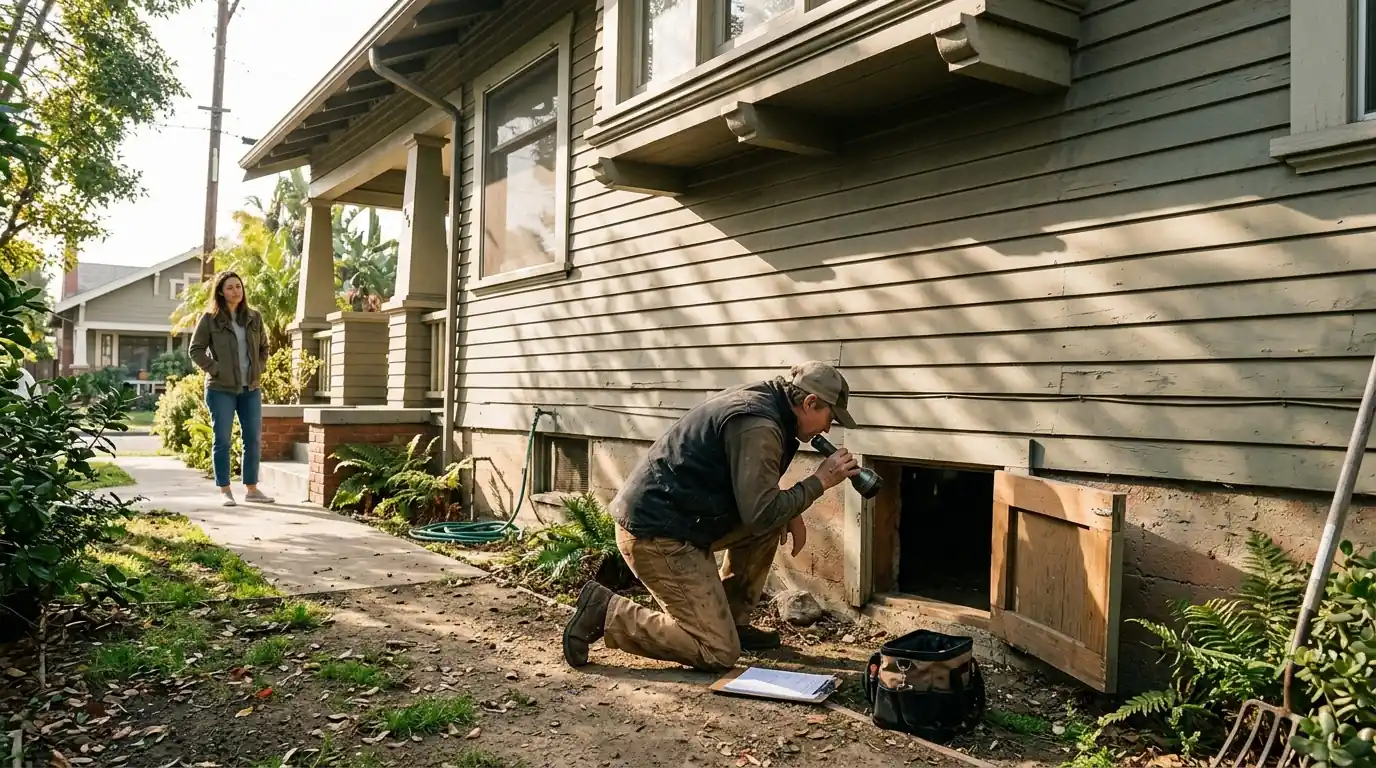
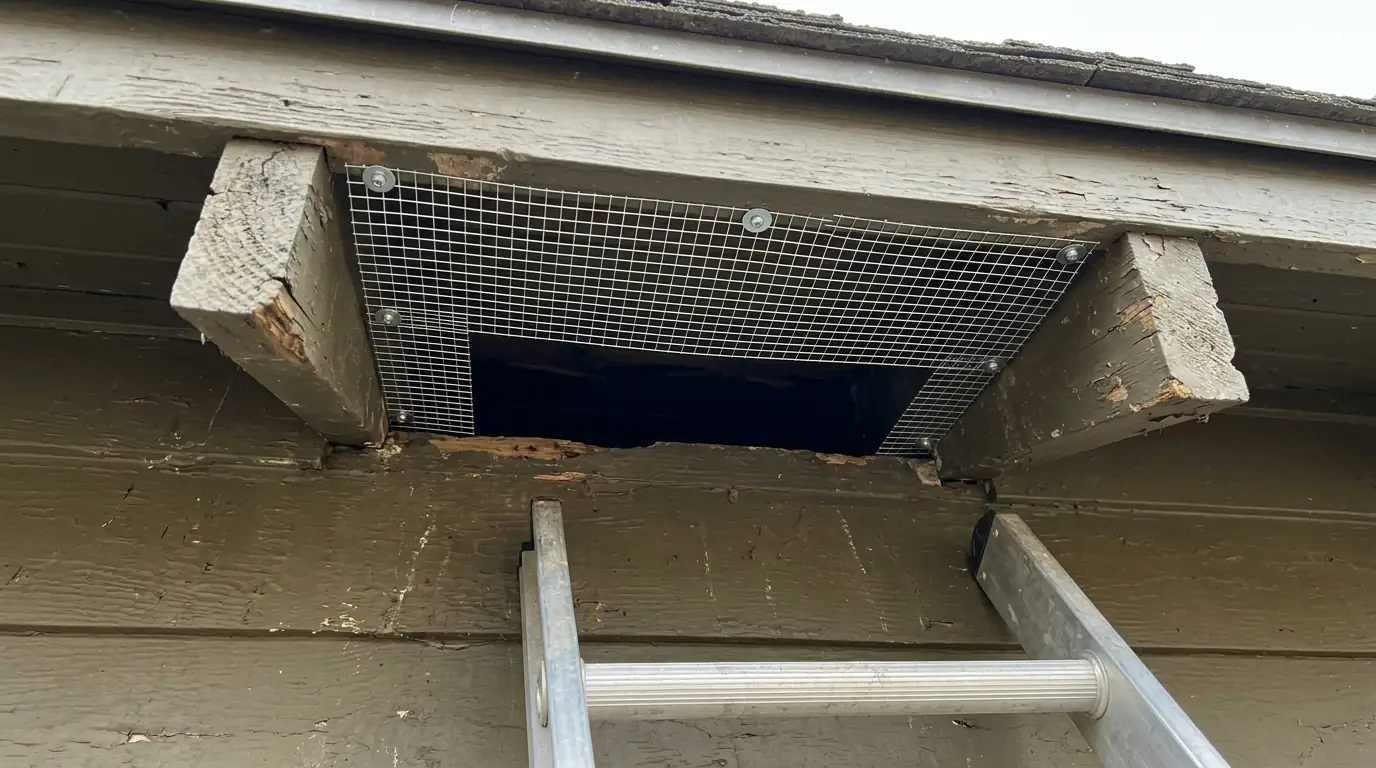
Rats can enter through a gap about the size of a quarter. We walk the roofline, eaves, vents, the garage door seals, and every place where pipes, wires and cables enter the structure. Common Long Beach openings include gaps at the end of tile roofs where the bird stops are missing, open eave blocks on Craftsman rafter tails, torn foundation and attic vent screens, gaps around air conditioning lines, and the space where a garage roof meets the house.
Inside, the attic tells us where they travel. Droppings and rub marks cluster along their runways and near the entry points. Mapping this first means the traps go where the rats actually move.
Step 2: trap inside while openings stay open
This order matters. If you seal every gap first, rats already in the attic get trapped inside, chew new holes or die in a wall void, which causes odor problems. Instead, we set snap traps along runways in the attic and garage, check them on a schedule, and keep trapping until the activity stops.
Snap traps are preferred indoors because they give a clear result and avoid rats dying in walls. Bait stations with rodenticide, where used, belong outside in tamper-resistant stations and are placed with pets, children and local wildlife such as owls and hawks in mind.
Step 3: seal the house, then cut the roads in
Once trapping has caught up, every entry point gets sealed with materials rats cannot chew: galvanized hardware cloth, sheet metal, steel mesh and concrete patch. Foam on its own does not stop them. Vent screens are replaced, tile roof ends get bird stops, and garage door seals are fixed.
Then work on the landscape. Trim palm skirts, cut ivy back at least a few feet from the roofline and walls, keep tree limbs several feet away from the roof, and pick up fallen fruit. A palm that is kept clean and a roof with no branches touching it removes the highway that brought them in.
- Have palm skirts and dead fronds trimmed at least once a year
- Keep ivy and vines off the upper walls and fences touching the roof
- Cut tree limbs back from the roofline
- Pick up fallen citrus and avocados daily during the season
- Store pet food and bird seed in sealed metal or hard plastic bins
Step 4: clean up and check back
Rat droppings and urine in insulation are unpleasant and can carry disease, so attic cleanup is often part of the job: removing contaminated nesting material, sanitizing hard surfaces, and in heavier cases replacing insulation. Wear a respirator and gloves if you go up there yourself, and do not sweep droppings dry.
A follow-up check a few weeks later confirms the seal is holding and no new rats have moved in. In neighborhoods with mature palms and fruit trees, a yearly look at the roofline before winter is a good habit. If you are hearing noises now, a person answers at (562) 636-0445 at any hour.
Reader questions
Could the scratching in my ceiling be squirrels or opossums instead of rats?
Timing helps. Tree squirrels are active during the day, so daytime noise in the attic often means squirrels. Opossums and raccoons are heavier and sound like thumping rather than scurrying. Roof rats are light, fast and active at night, especially just after dark and before dawn. Droppings and rub marks in the attic usually settle the question.
Do ultrasonic plug-in devices keep roof rats out of the attic?
There is little good evidence that they work for long. Rats often get used to the sound, and the devices do nothing about entry points or the food and cover outside. Sealing gaps with chew-proof materials and trimming the trees and vines that touch the house is what keeps roof rats out over time.
Is it my job or the city's to trim the palm tree in front of my house?
It depends on where the tree is. Palms on private property are the owner's responsibility. Street trees in the parkway are often maintained by the city, and Long Beach has rules on who may trim them. If a parkway palm is sending rats onto your roof, contact the city about it. Palms in your yard can be trimmed by any qualified tree service.
Written by Celeste Goodwin, Termite Guides Editor at Exquisite Termite Control.