In this guide
- Why termites swarm at all
- Winter, December through February: quiet but not idle
- Spring, February through May: subterranean flights after rain
- Early summer, June and July: the lull and the buildup
- Late summer and fall, August through October: drywood season
- What to do in the first hour after a swarm
- How swarm timing shapes the treatment calendar
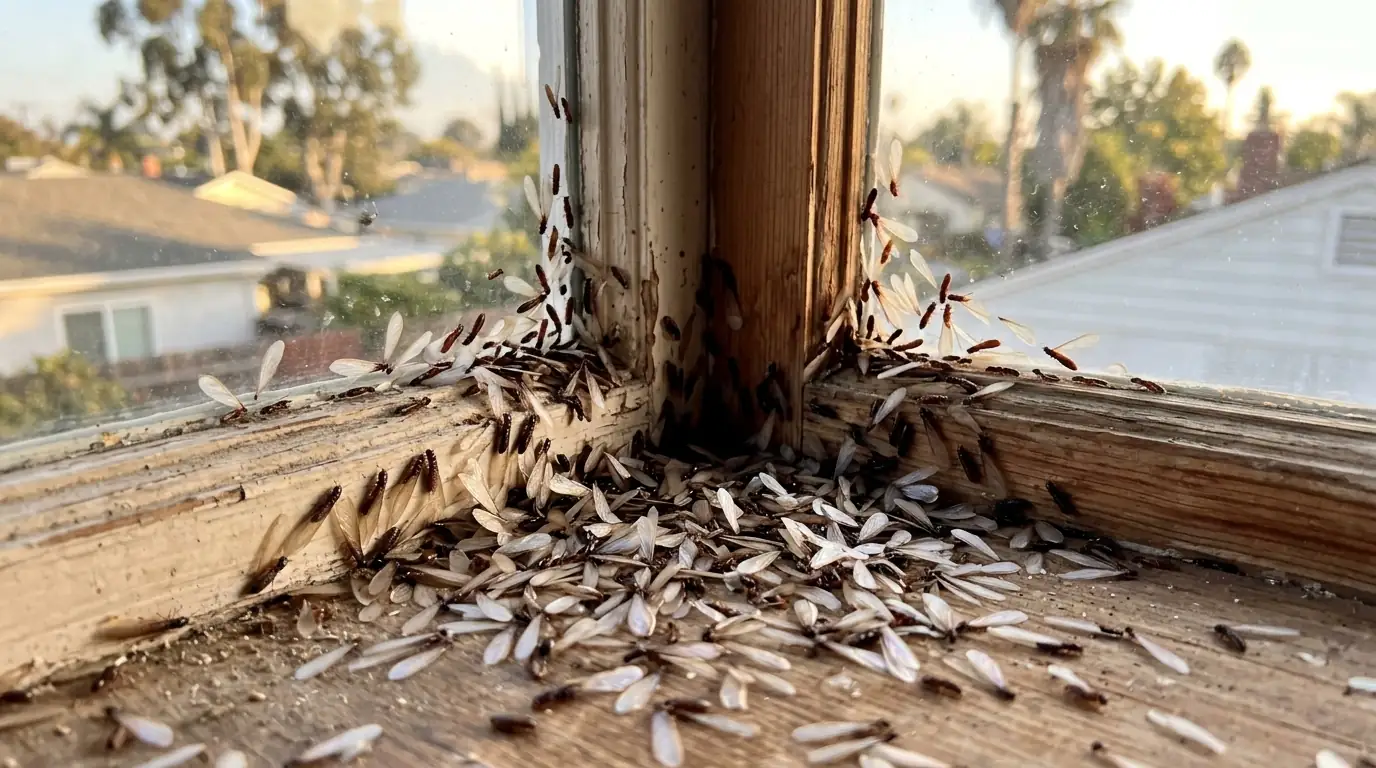
A termite swarm is the moment most homeowners find out they have termites. One afternoon there are dozens of winged insects on the inside of a window, or a drift of tiny wings on the sill the next morning. It is alarming, but it is also useful information, because the time of year, the weather that day and the place they came from all point to which termite is involved.
Here is how the year usually unfolds around Long Beach and the coastal Southern California basin, season by season, along with what to do when a swarm happens in your home.
Key takeaways
- Subterranean termites swarm in spring, usually on a warm day after rain, low in the house.
- Drywood termites swarm from about August to October on hot, sunny days, often after the first heat wave.
- A swarm indoors means a mature colony is already in the structure.
- Save a sample, photograph the spot, and do not seal the exit holes.
- Winter and early summer are good times to inspect and fix moisture problems before the next flight.
Why termites swarm at all
Swarmers, also called alates, are the reproductive caste of a mature colony. A colony raises them for months, then releases them on a day when temperature, humidity and light line up. They fly briefly, drop their wings, pair off and try to start new colonies. Most fail, but enough succeed that a neighborhood with older wood framing stays under steady pressure year after year.
A swarm from inside the house means a mature colony is already in the structure, usually several years old. A swarm you see outdoors, on a fence or a neighbor's eave, means colonies are close by and your wood is a landing target.
Winter, December through February: quiet but not idle
Winter is the slowest stretch for swarms in Long Beach, though colonies keep feeding because our winters are mild. Western subterranean termites in the soil benefit from winter rain, which moistens the ground and helps colonies grow toward the spring flight.
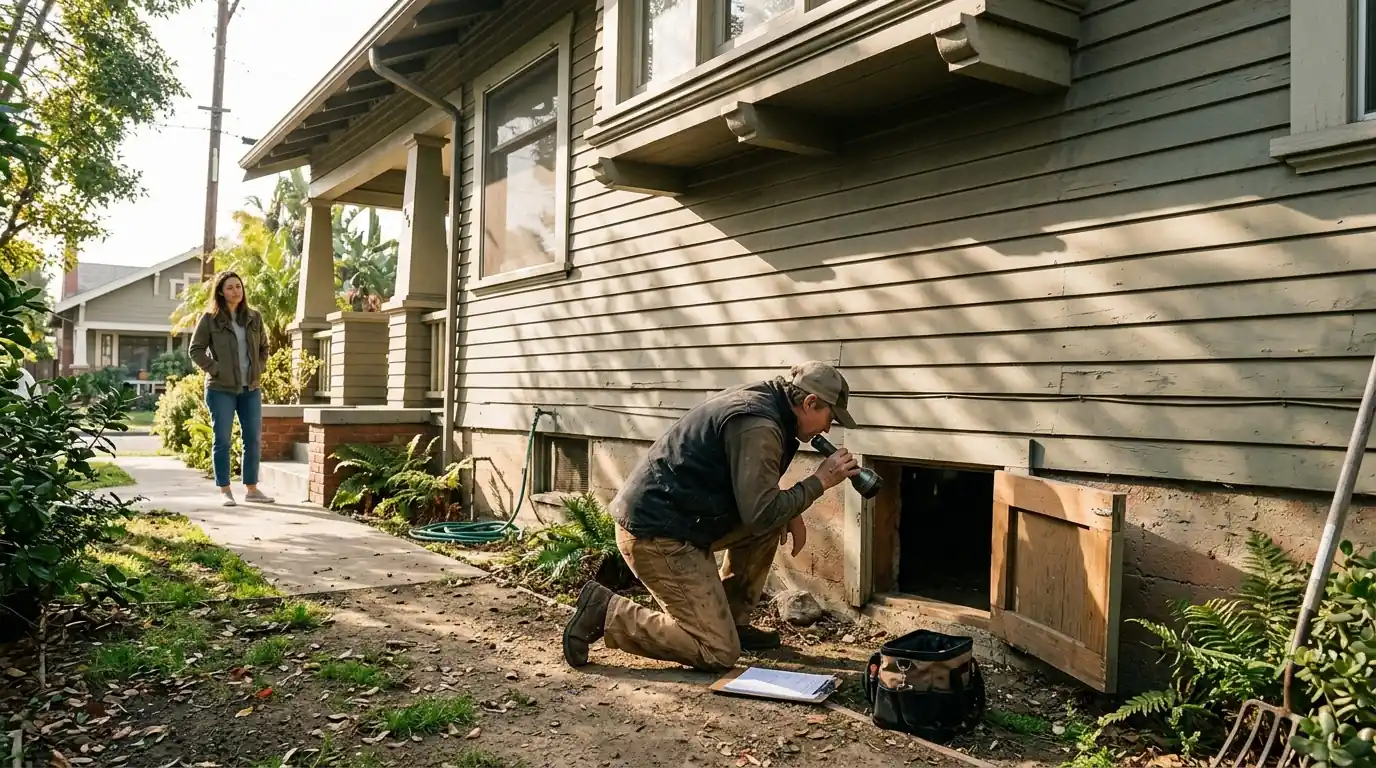
This is a good season for the work that swarms tend to interrupt. Crawlspaces are cooler and easier to work in, attic temperatures are bearable, and there is time to fix earth-to-wood contact, leaky hose bibs and clogged gutters before spring. If you saw drywood swarmers last fall and never dealt with them, winter is a sensible time to get an inspection and plan treatment calmly.
Spring, February through May: subterranean flights after rain
Western subterranean termites are the spring swarmers. The classic pattern is a warm, still, sunny day that follows a rain, often in the late morning. The swarmers are small and dark, nearly black, with pale translucent wings, and they come up through cracks in a slab, gaps at baseboards, bathroom plumbing openings or the soil along the foundation.
Indoors you will often find them near the ground floor: around a tub, at a sliding door threshold, in a garage along the slab edge. Outdoors you might see them rising out of a lawn, a planter bed or a gap between the driveway and the house.
A spring swarm inside a slab home in Los Altos or a raised bungalow in Rose Park points strongly toward subterranean termites and a soil-based treatment plan, such as a liquid barrier or a bait system.
- Look for: small dark swarmers, low in the house, after rain
- Check for: mud tubes on the foundation, slab cracks, wet crawlspace soil
- Likely next step: subterranean inspection and a soil treatment plan
Early summer, June and July: the lull and the buildup
Early summer often brings marine layer mornings that keep the coast cool, and swarm activity drops off for most species. Drywood colonies are busy raising the alates that will fly later in the year, and you may notice more pellets appearing as activity picks up in warm attics.
This is a good window to look for drywood clues before the fall flight. Check the tops of garage walls, attic floors near the eaves, the sills of west-facing windows and the space under exposed rafter tails. A fresh pellet pile in June or July often marks a colony that will swarm a few weeks later.
Late summer and fall, August through October: drywood season
This is the season Long Beach is known for. Western drywood termites typically swarm on warm, sunny afternoons from roughly August into October, and the first heat wave of late summer often sets off a big flight across many neighborhoods at once. Swarmers are slightly larger than subterranean ones, with a reddish brown head and smoky dark wings.
They come out of kick-out holes and small openings in the wood itself: attic vents, eaves, window frames, door trim, built-in cabinets and occasionally furniture. In Bluff Park, California Heights or Belmont Heights it is common to find swarmers on the inside of upstairs windows or collecting around an attic hatch. Downtown and in Alamitos Beach, residents of older courtyard buildings sometimes see them on several floors at once because the colony is in shared framing.
Pacific dampwood termites can also fly in late summer and fall, often near dusk and drawn to lights. They are much larger, and around Naples and the marinas they point to wet wood in docks, decks or seawall lumber.
What to do in the first hour after a swarm
Swarmers themselves are harmless to people and do not eat wood. Most die within hours indoors because they dry out. The goal now is to keep evidence and avoid making the source harder to find.
Avoid spraying the area with insecticide or sealing up the openings they came from. Sealing the hole hides the colony without killing it, and the next swarm will simply find another exit. A vacuum is fine for cleanup once you have a sample. If you want someone to look at what you have, a person answers at (562) 636-0445 around the clock.
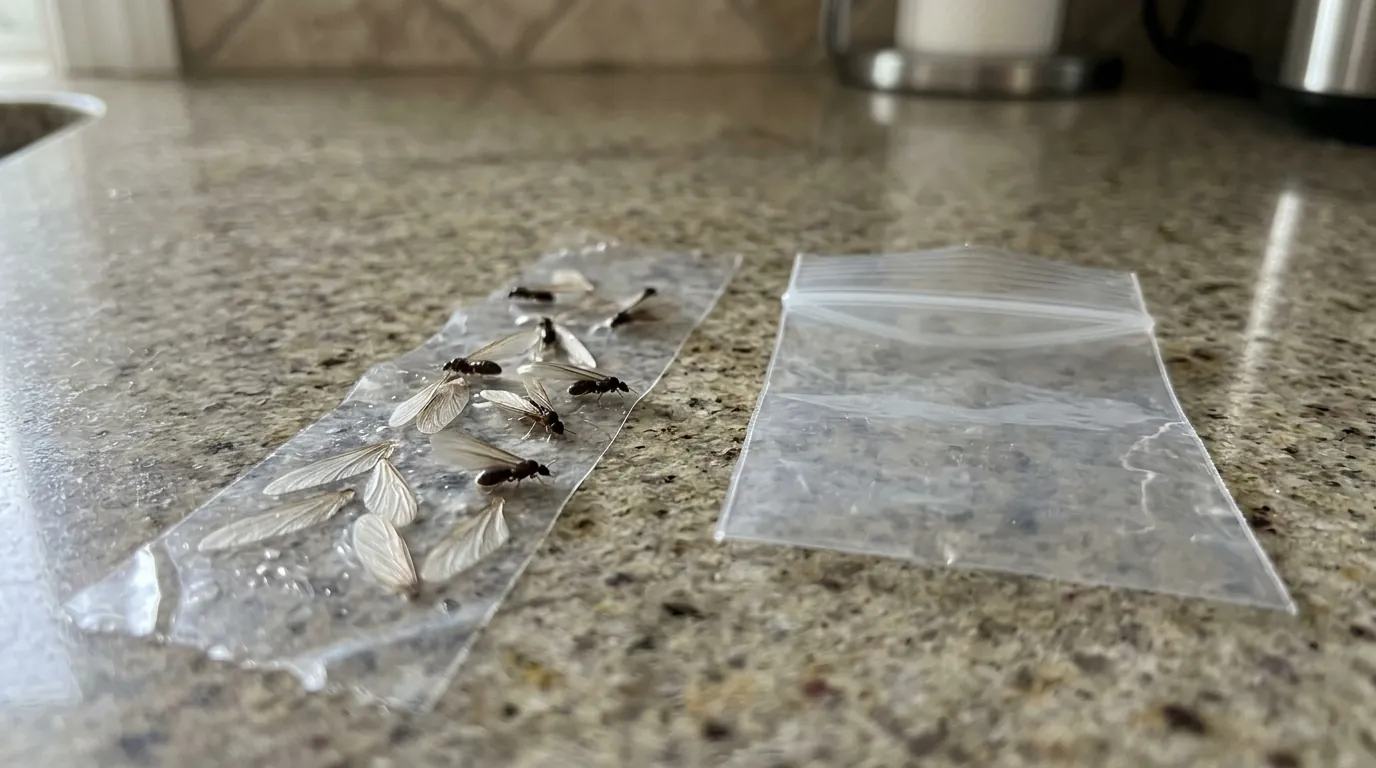
- Collect a few swarmers and wings in a sealed bag or on clear tape
- Photograph where they gathered and note the time and the weather
- Look above and around that spot for pellets, small holes or mud
- Then vacuum the rest and keep pets away from the pile
How swarm timing shapes the treatment calendar
Swarm season does not set the treatment date, but it affects planning. Fumigation can be done any time of year, and many homeowners prefer to tent soon after a fall swarm reveals how widespread the problem is. Local drywood treatments are easiest when kick-out holes and pellets are fresh and the colony locations are clear.
Subterranean treatments go best when the soil is not saturated, so a liquid application right after a heavy storm sometimes waits a few days. Bait systems can be installed any time and keep working through the following swarm seasons. Either way, a swarm is a signal to act within weeks, not a reason to panic overnight.
Reader questions
Why did the swarm stop after a day, did the termites go away?
The colony is still there. A swarm is a brief release of reproductives, and once they have flown the colony goes back to feeding inside the wood or soil. Many colonies swarm more than once in a season, sometimes days or weeks apart. The quiet afterward is normal and is not a sign the problem has solved itself.
Are flying ants and swarming termites easy to tell apart?
Look at three things. Termites have a thick waist with no pinch, straight beaded antennae and four wings of equal length. Ants have a narrow pinched waist, elbowed antennae and front wings longer than the back pair. In Long Beach, carpenter ant and other ant swarms happen at overlapping times, so a quick look at a sample on clear tape is worth it.
My neighbor had a swarm, should I worry about my house?
It is a reason to look, not to panic. Drywood swarmers fly short distances and land on nearby wood, so attached homes, duplexes and houses on tight lots share risk. Check your eaves, attic vents and window trim for pellets over the following weeks, and consider an inspection if your home has exposed rafter tails or older trim.
Written by Celeste Goodwin, Termite Guides Editor at Exquisite Termite Control.