In this guide
Termite pricing can feel opaque until you see how it is built. Two houses on the same Long Beach block can get very different numbers because one has a single colony in a window frame and the other has activity in the attic, the garage and the subfloor. The type of termite, the size and shape of the structure and how much wood can be reached all matter more than the zip code.
Below are typical ranges we see for common termite work on Long Beach homes. These are typical ranges, not quotes. Your price is set after an inspection, based on what is actually found in your house.
Key takeaways
- Fumigation for a small to mid-size house is typically $1,485 to $3,940; these are typical ranges, not quotes.
- Local drywood work is cheaper per job but only treats the areas found.
- Subterranean costs depend on foundation length and whether a slab must be drilled.
- Damaged wood repair is priced separately from treatment.
- Compare proposals by scope and findings, not just by the total.
How termite jobs are priced
Most termite work is priced on a combination of the structure and the findings. Fumigation and heat are priced mostly by the size and shape of the building, because the whole thing is treated. Local drywood treatments are priced by the number of areas and how hard each one is to reach. Subterranean treatments are priced by the length of foundation to be treated and whether a slab has to be drilled. Repairs are priced by the wood that has to be replaced and what has to be removed to get to it.
That is why an inspection comes first. Without knowing how many colonies there are and where, any number is a guess.
Typical ranges by type of work
These ranges reflect common single family homes and small multifamily buildings in Long Beach. Very small structures, very large or complex ones, and condo buildings can fall outside them.
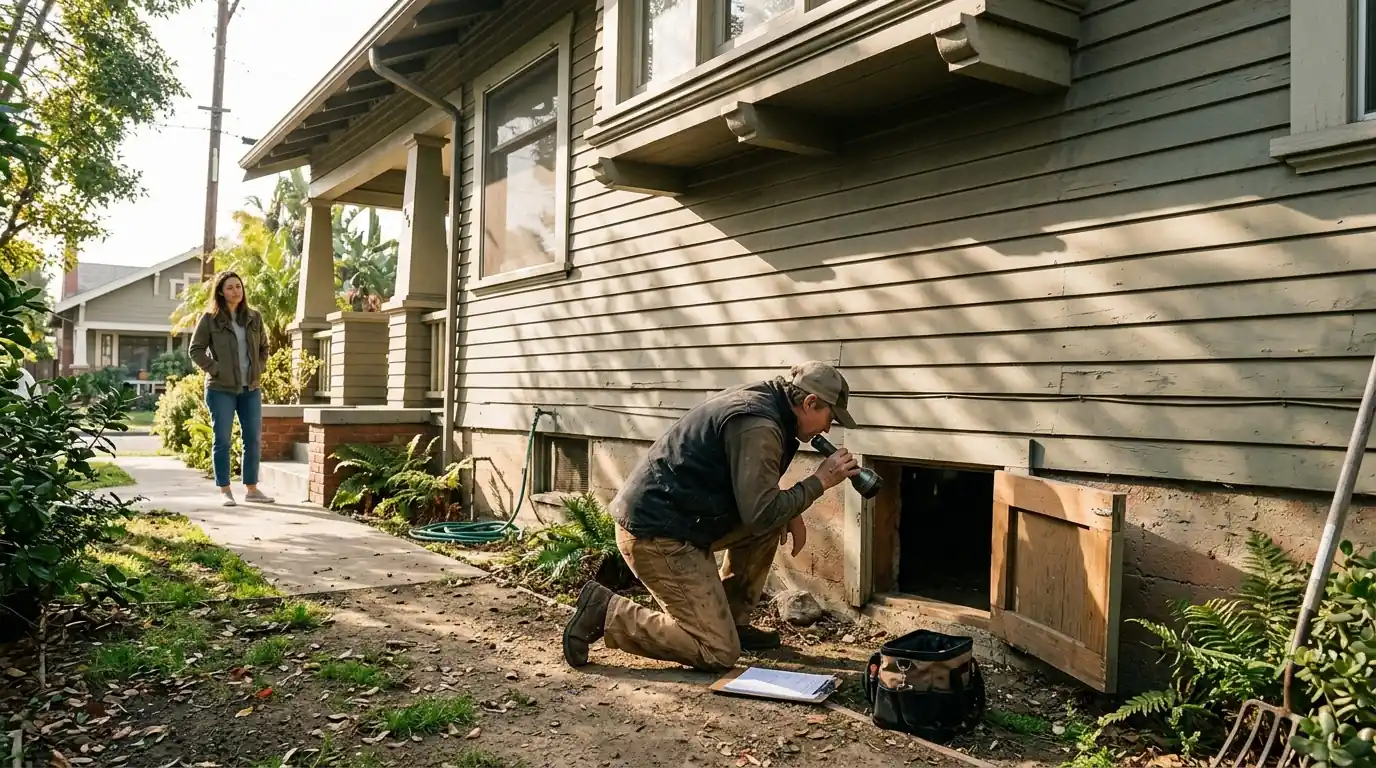
- Termite inspection for a homeowner: typically $95 to $245, depending on size and access
- Real estate termite inspection and report: typically $135 to $315
- Whole-structure fumigation, small to mid-size house: typically $1,485 to $3,940
- Whole-structure fumigation, larger or complex house: typically $3,620 to $6,850
- Whole-structure heat treatment: typically $1,760 to $4,380
- Local drywood treatment, drill and inject or orange oil: typically $385 to $1,465, depending on the number of areas
- Subterranean liquid treatment around a foundation: typically $1,180 to $3,460
- Subterranean bait system installation: typically $1,345 to $3,280, plus monitoring of about $285 to $560 per year
- Borate treatment of an open attic or crawlspace: typically $465 to $1,385
Why fumigation prices vary so much
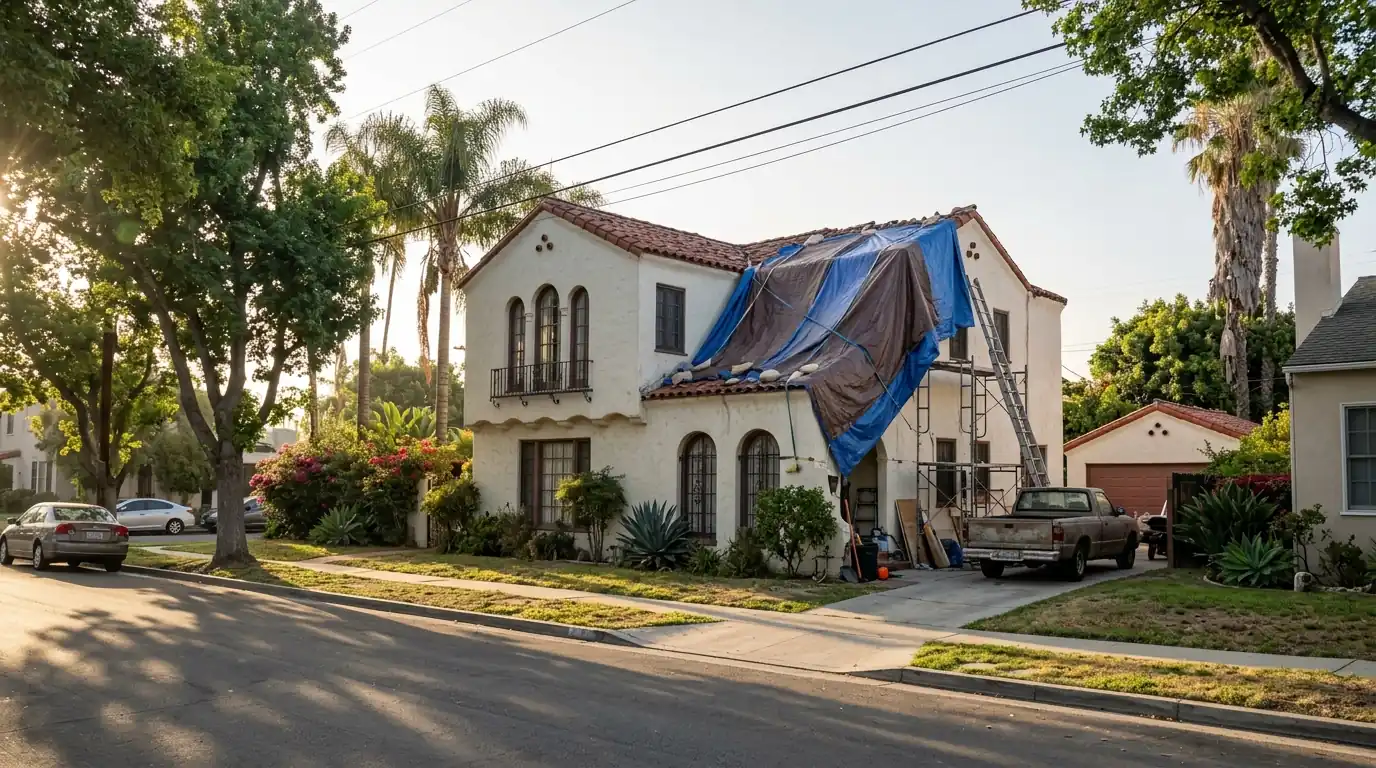
Fumigation is priced by the volume under the tarps and by how hard the structure is to tarp and seal. A one-story bungalow with a simple gable roof is far easier than a two-story Spanish home with a tile roof, a detached garage and tight side yards. Clay tile roofs take extra care and time. Homes with attached patio covers, second-story balconies or neighboring walls within a couple of feet need more labor to seal.
Prep logistics can add to the bill, such as extra fumigation bags, removing heavy items from walls, or coordinating with the gas utility. On condo and courtyard buildings, the total cost is spread across units by the HOA, so per-unit amounts can look lower even though the whole job is larger.
What drives local and subterranean treatment costs
Local drywood work is mostly a question of access. A colony in exterior fascia that can be reached from a ladder costs far less to treat than one in an enclosed soffit or behind finished drywall that has to be opened and patched. Each separate area adds time, so a plan treating six spots is not much cheaper than tenting a small house, which is one reason local treatment fits best when activity is limited.
Subterranean treatments scale with the length of the foundation and the type of construction. A raised-foundation bungalow in Rose Park with an open crawlspace is treated by trenching and rodding the soil along the walls and piers. A slab ranch in Los Altos may need holes drilled through the slab along plumbing walls and expansion joints, then patched, which adds labor. Bait systems trade a lower disruption for an ongoing monitoring cost.
Repair costs are a separate line
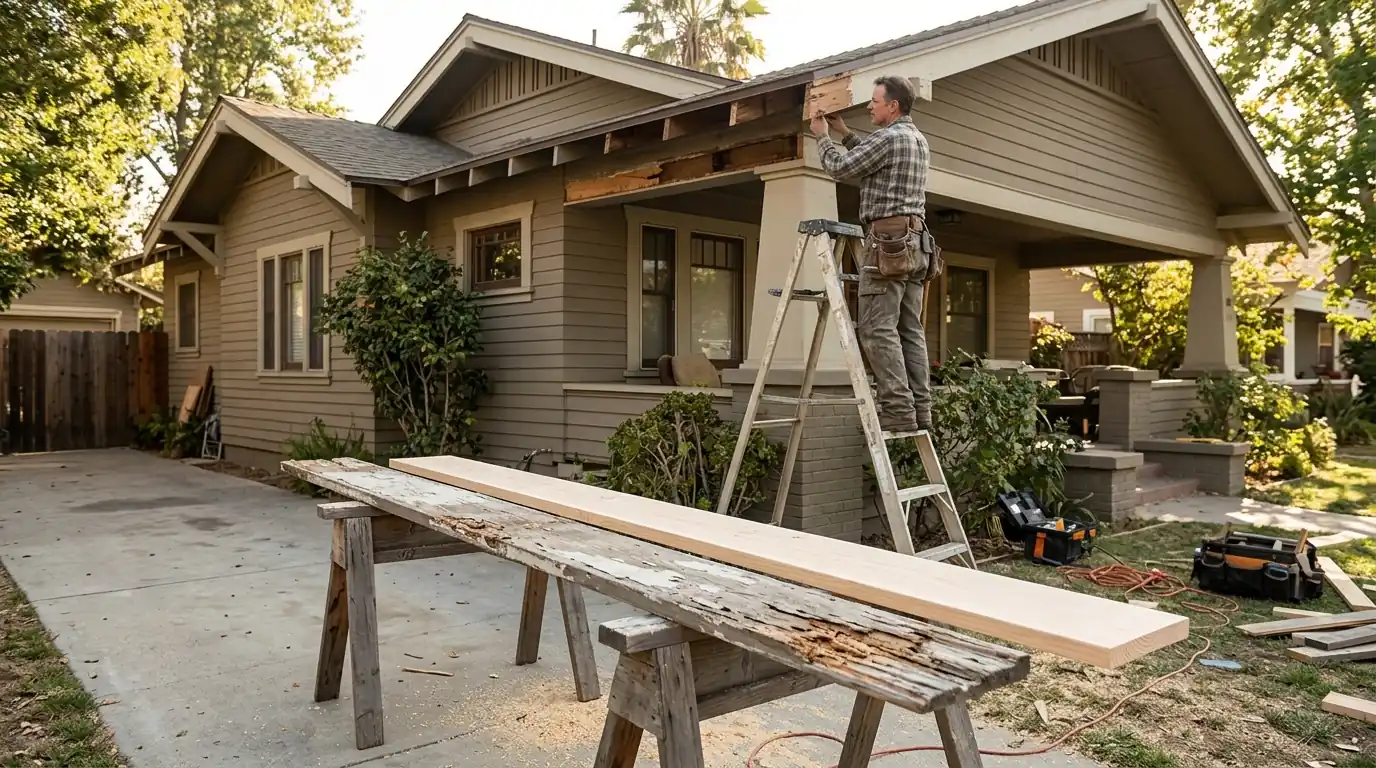
Treatment kills termites. It does not replace damaged wood. If the inspection finds weakened fascia, rafter tails, window sills, door jambs, subfloor or sill plate, repair is priced separately. Simple trim and fascia replacement on a Craftsman eave might typically run $345 to $1,280 per section, while subfloor or sill plate repair under a bathroom can typically run $1,640 to $5,950 or more depending on what has to be removed.
Fungus damage, often called dry rot, is common alongside termite findings in older Long Beach homes, especially at shower walls, door thresholds and around windows exposed to the marine layer. It is usually listed and priced as its own item.
Factors that raise or lower the price on your home
Every one of these shows up on real Long Beach jobs. Knowing them helps you read a proposal and ask good questions.
- Number of separate active areas found in the inspection
- Size, height and roof type, especially clay tile
- Access to attics, crawlspaces and enclosed eaves
- Detached garages, sheds, patio covers and balconies included in the work
- Slab drilling versus open soil for subterranean work
- Amount of damaged wood to replace
- Whether the job is a single unit or a whole HOA building
How to compare two proposals fairly
When comparing proposals, line them up by what is being treated, not just the total. Check that both list the same findings, the same structures and the same method. A local treatment proposal that is half the price of a fumigation proposal is not a cheaper version of the same thing; it treats less of the house. Ask what follow-up is included and when.
Also compare the inaccessible areas listed on each inspection. A lower price based on fewer findings may simply reflect a shorter look. If you want to talk through numbers on a proposal you already have, a person answers at (562) 636-0445 around the clock.
Reader questions
Why did my neighbor pay less to tent a house that looks like mine?
Fumigation prices depend on volume, roof type, access and prep, not just how a house looks from the street. A neighbor's house may have a lower roof pitch, no detached garage, composite shingles instead of tile, or easier side yards for the tarps. Dates matter too, since late summer and fall are busy. Compare the square footage and structures listed on each proposal.
Is it cheaper in the long run to treat locally every year than to fumigate once?
It can go either way. If a house has one or two reachable colonies and stays quiet afterward, local treatment is clearly the lower cost. If new activity keeps appearing in different rooms each season, repeated local treatments add up and may still leave hidden colonies working. A useful rule of thumb is to look at the treatment history over two or three years before deciding.
Do these price ranges include the inspection report?
Usually the inspection is a separate line, and some companies credit part of it toward the treatment. Real estate reports cost a bit more because they follow the formal California report format and may need a completion notice later. Ask how the inspection fee is handled when you call, so the final number on the proposal is clear.
Written by Celeste Goodwin, Termite Guides Editor at Exquisite Termite Control.